Plan your LA golden-hour helicopter flight by booking early and timing takeoff 15–25 minutes before official sunset; arrive 30–45 minutes early for ID, briefing, and weight-and-balance. Pick a route that matches your visuals—coast for layered skies and horizons, DTLA for skyline glow, or hills for terrain depth—and confirm seat assignment, door-on vs. door-off, and marine-layer reroute options. Choose a safety-first operator with published weather minima, and you’ll see what to do next.
Choose the Right LA Sunset Helicopter Flight Type
When should you book—and what kind of route will give you the best golden-hour payoff? Start by selecting a flight type that aligns with your visual preferences and risk tolerance. A coastline run favors layered skies over Santa Monica and Malibu; an urban loop frames downtown glass, stadium curves, and the Hollywood sign; a mixed route gives you horizon plus city sparkle. For innovation-minded planning, pick operators that publish live weather minima, offer stabilized camera windows, and use ADS-B traffic awareness to reduce holding patterns that waste color.
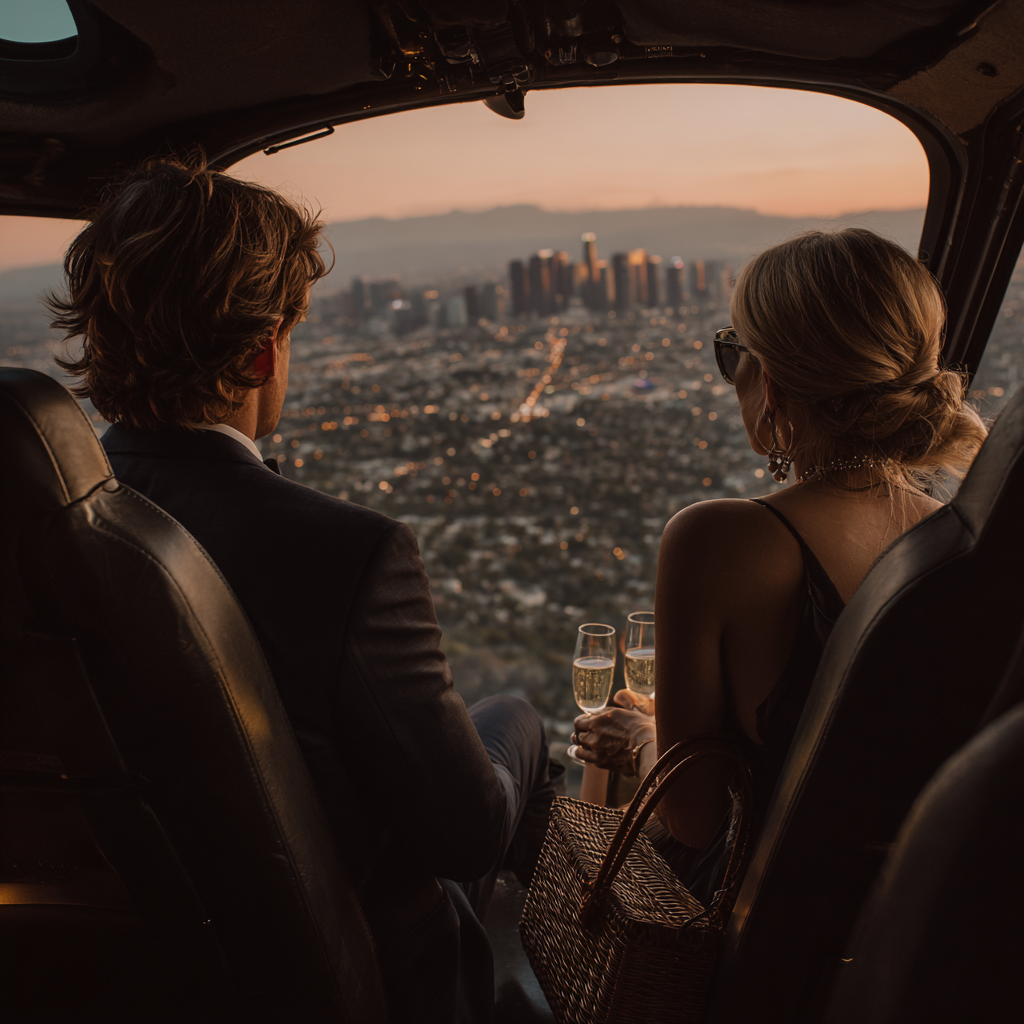
Confirm sunset logistics: seat assignment, door-on vs door-off, and whether you can reroute for marine-layer clarity. Follow helicopter etiquette—secure loose items, keep your hands inside, and brief your pilot on filming so safety stays first.
Time Your Takeoff for Golden Hour in Los Angeles
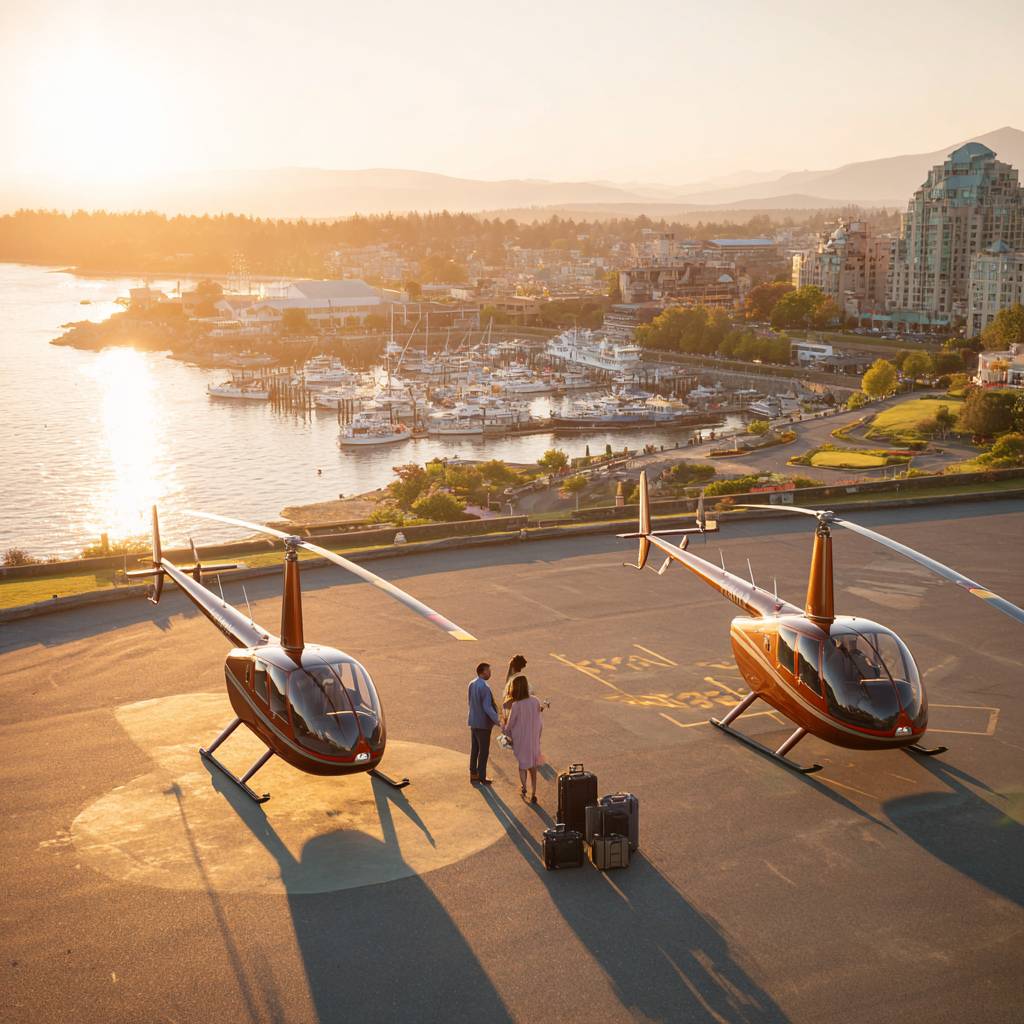
A perfect LA golden-hour flight starts with a takeoff that lands you in the air 15–25 minutes before official sunset, so you can film the warm, low-angle light over the coastline or skyline before it drops behind haze or hills. Build time management into the whole chain: arrive 30–45 minutes early for ID, briefing, and weight-and-balance, then plan a buffer for ramp traffic and ATC holds. Check sunset for your exact date, plus civil twilight, and ask the operator how long startup and taxi typically take at that hour. Use a weather app for marine layer timing and wind shifts that can dull the glow. For helicopter safety, keep gear to a minimum, secure straps, and follow headset and door policies exactly.
Pick an LA Sunset Helicopter Route (Beach, DTLA, Hills)
With your takeoff timed to put you over LA 15–25 minutes before sunset, choose a route that matches the light you want to capture and the airspace you’ll fly through. A beach route favors unobstructed horizons and steadier sightlines, but it may require sequencing through coastal corridors and rapid compliance with altitude and shoreline restrictions.
If you want an urban grid, pick a DTLA loop that threads controlled airspace with precise headings; you’ll need a pilot who coordinates cleanly with ATC and avoids overflight constraints. A hills route trades open water for layered terrain and tighter wind gradients, so plan for higher minimums, ridge-clearance margins, and smoother turns. Ask for a stabilized platform, quiet tech, and a route brief that maps checkpoints, radio calls, and contingency diversions.
What You’ll Actually See at Sunset From the Air
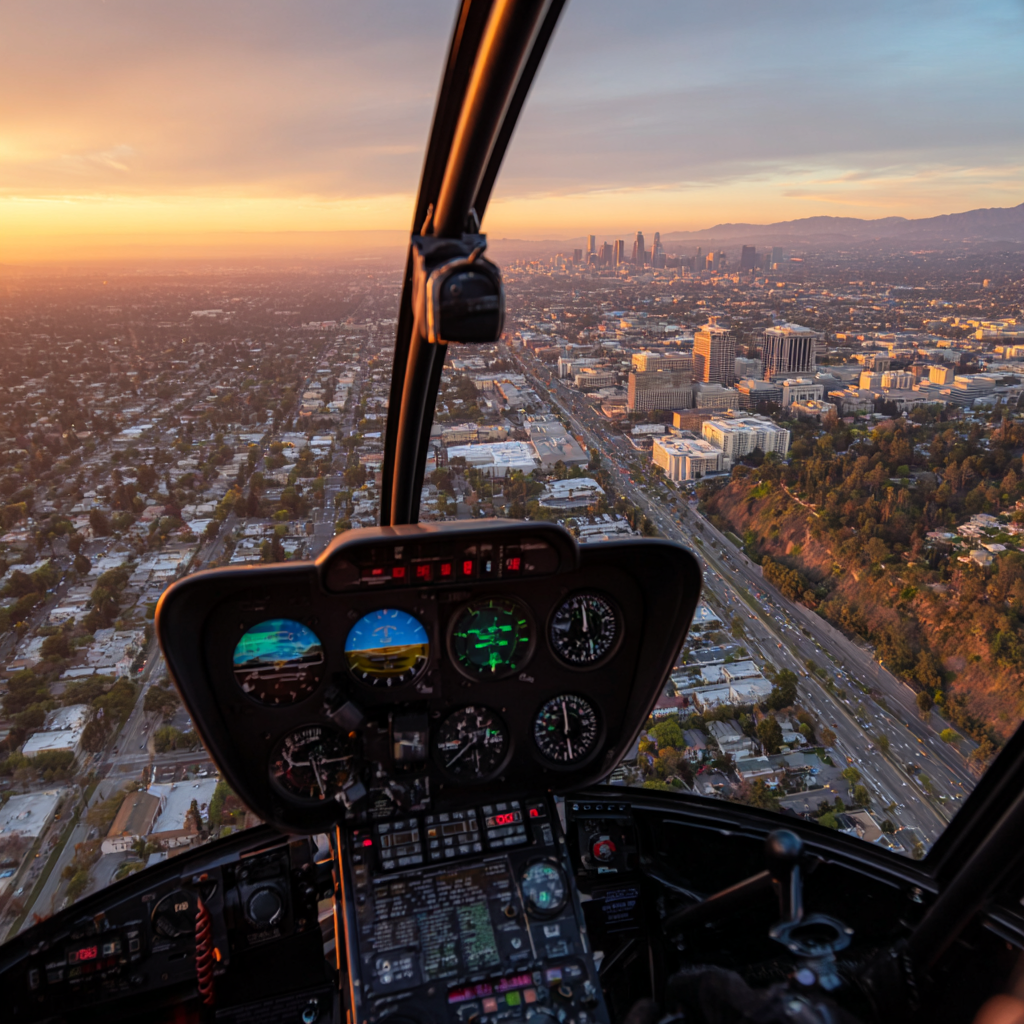
As you lift into golden hour, you’ll track LA’s coastal landmarks as the sun rims the shoreline in copper light and the ocean turns glassy beneath you. You’ll then swing toward downtown, where the skyline sharpens into silhouettes and the first city lights spark on at dusk. Keep your headset on and your camera secured with a strap so you can take it all in without shifting your focus from the pilot’s safety briefing.
Golden-Hour Coastal Landmarks
Where do you look first when the Pacific starts turning molten gold? You’ll track the shoreline from Santa Monica’s pier to Malibu’s coves, where coastal scenery sharpens into cliffs and pocket beaches. As you bank smoothly, you’ll spot surfers as dark commas and kelp beds as ink strokes beneath golden hour reflections. You’ll glide past the Palos Verdes bluffs, watching sea caves flash briefly when the sun hits their mouths. Catalina often floats on the horizon like a low-slung spacecraft, clearer as haze drops.
You’ll keep your gaze moving but stay strapped in, headset on, and hands off doors and latches. Your pilot maintains safe altitude and routing while you capture stabilized, vibration-managed shots.
Downtown Skyline At Dusk
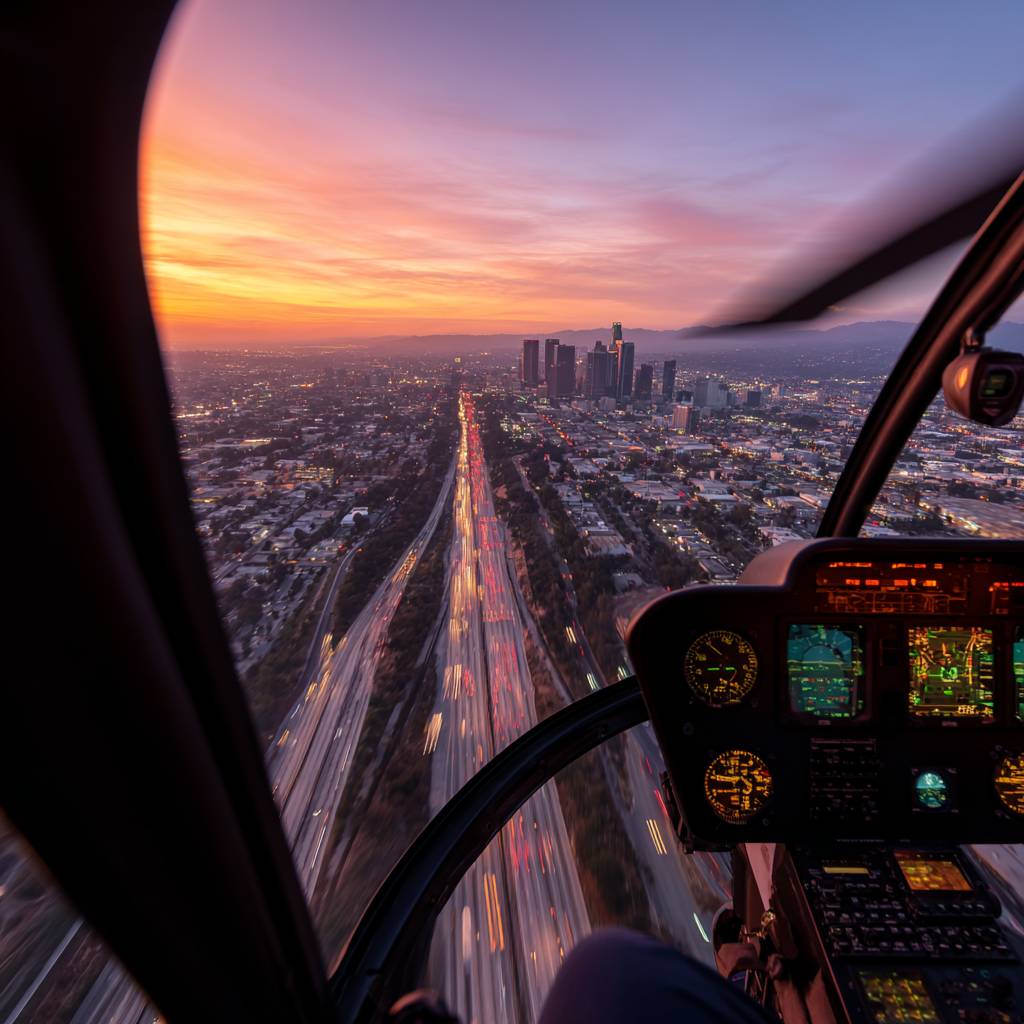
The coastline’s warm sheen falls behind you, and the city grid starts to glow. Ahead, the downtown skyline rises like a glass circuit board: US Bank Tower catching the last amber edge, Wilshire Grand’s crown pulsing, and the Crypto.com Arena’s halo lighting up as twilight deepens. You’ll see ribbons of traffic on the 110 and 10, turning into red-and-white data streams, while rooftop pools flash brief mirrors of the sun.
Your pilot keeps a stabilized orbit and calls out altitude, wind, and route changes, so you can track landmarks without leaning or unbuckling. Keep your headset on, secure loose items, and follow the no-phone-out-window rule. For two-word discussion ideas: “light maps,” “tower reflections,” “freeway streams.”
Wear the Right Layers for an LA Sunset Flight
How quickly does a warm LA evening turn crisp once you’re a few hundred feet above the coastline? As the sun drops behind Malibu and the city lights start to pixelate, your cabin comfort can change fast. Plan for layers and wind so you stay focused on the view, not the chill, and maintain temperature and safety throughout takeoff, doors-closed cruise, and landing.
- Start with a breathable base that won’t trap sweat under a harness.
- Add a light insulated midlayer you can zip one-handed.
- Finish with a windproof shell; rotor wash finds every gap.
- Choose closed-toe shoes and secure cuffs to prevent snags near doors.
Keep pockets minimal, and avoid loose scarves or dangling cords.
Golden-Hour Camera Settings
A smart golden-hour setup starts before the rotors spin up, because the light drops fast once LA slips from molten orange into blue. Set aperture priority at f/2.8–f/4 for skyline glow, then cap ISO at 1600–3200 with auto-ISO to protect highlights. Enable golden hour autofocus with continuous AF and a single point, so you track the coastline while the cabin vibrates. Dial in a wind adjusted shutter: 1/500 for wide shots, 1/1000 if you’re longer than 70mm or turbulence picks up. Shoot RAW, lock exposure on the sunlit haze, and bracket ±1 stop for neon and shadows. Keep straps tight and never swap lenses midair.
LA Sunset Helicopter Mistakes to Avoid (Seats, Sickness, Wind)
While the skyline turns amber and the Pacific starts throwing back copper light, a few avoidable missteps can dull your LA sunset helicopter ride fast—picking the wrong seat for your photo goals, ignoring early signs of motion sickness, or underestimating how coastal wind and rotor wash change comfort and visibility. Lock in smart seating strategies: ask which side frames Downtown vs. Santa Monica, and keep your lens away from the window to cut glare. Follow sunset etiquette—secure loose hats, silence flash, and keep movements smooth so the pilot can hold a stable line. If you’re prone to nausea, eat light, hydrate, and tell the crew early; they’ll adjust altitude, turns, or airflow. Expect gusts near the shoreline: dress in layers and brace your elbows for steadier shots.
Conclusion
You time your takeoff right as the sun slips low, and you lift off just as the city starts to glow. You pick your route—beach, downtown, or hills—and you see each one catch fire, each one soften, each one shimmer. You wear warm layers as the cabin cools, and you lock in low-light settings as the horizon fades. You confirm seats, policies, and weather, and you fly safer, calmer, happier.