Beat LA gridlock with a Part 135 helicopter charter that turns a 90–120 minute peak drive into a 12–15 minute point‑to‑point flight. You’ll bypass choke points via VFR/IFR corridors, use approved helipads with rooftop access, and hit ±3–5 minute ETAs. Expect sub‑30‑minute DTLA–LAX transfers, rapid turn times, noise‑abatement profiles, SMS-backed ops, FOQA monitoring, and OEM-tasked maintenance. The time arbitrage often outweighs charter rates—especially for mission‑critical windows, LAX slots, and predictable curb‑to‑curb block times you can count on next.
The Time-Saving Advantage Over Gridlock
Although surface congestion varies by corridor and time of day, aerial point-to-point service routinely compresses door-to-door timelines compared to peak LA freeway conditions. You bypass signal delay, lane-density shocks, and incident-induced queuing with predictable block-to-block schedules. For urban commuting, the helicopter benefits are quantifiable: minimized buffer time, reduced variance in arrival, and higher on-time performance under IFR/VFR matrices. You stage at proximate helistops, execute rapid turn times, and leverage direct routing within controlled airspace while complying with Part 135 duty limits, noise abatement profiles, and curfews.
You also cut transfer friction: curb-to-rotor via vetted ground links, digitized weight-and-balance, and preclearance of landing permissions. Net effect: materially shorter elapsed time, especially for 15–40 mile trips where freeway LOS degrades, yielding superior schedule reliability without sacrificing regulatory compliance.
Point-to-Point Routes That Bypass Bottlenecks
You can execute point-to-point legs that cut latency by 40–70% versus surface routes, using approved helipads for direct rooftop access under Part 135 ops specs. Coastal-to-downtown hops follow pre-coordinated VFR corridors and noise-abatement profiles, minimizing detours while maintaining Class B compliance. By skipping freeway choke points like the 405/101 and I-10/110 interchanges, you reduce exposure to peak-hour variability and improve ETA reliability to ±3–5 minutes.
Direct Rooftop Access
Two realities define “direct rooftop access” in Los Angeles: zoning and FAA constraints. You can’t assume ubiquitous rooftop landings; post-1974 building codes largely removed mandatory helipads, and many roofs lack Part 77 compliance, load ratings, or fire-life-safety approvals. Still, where permitted, you gain urban convenience by replacing curb-to-curb transfers with elevator-to-aircraft movements.
You’ll operate under Part 91/135, coordinate with ATC for Special Flight Rules and noise abatement, and use approved helicopter landing facilities (HLFs) certified by LADBS and LAFD. Expect weight/CG checks, downwash limits, obstacle clearance (OEI), and rooftop FATO/TLOF dimensional compliance per AC 150/5390-2. Slot availability, curfews, and NOTAMs drive feasibility. Align itineraries with pre-vetted rooftops, secure indemnification, and verify insurance endorsements. Result: true point-to-point routing that bypasses surface bottlenecks.
Coastal-To-Downtown Hops
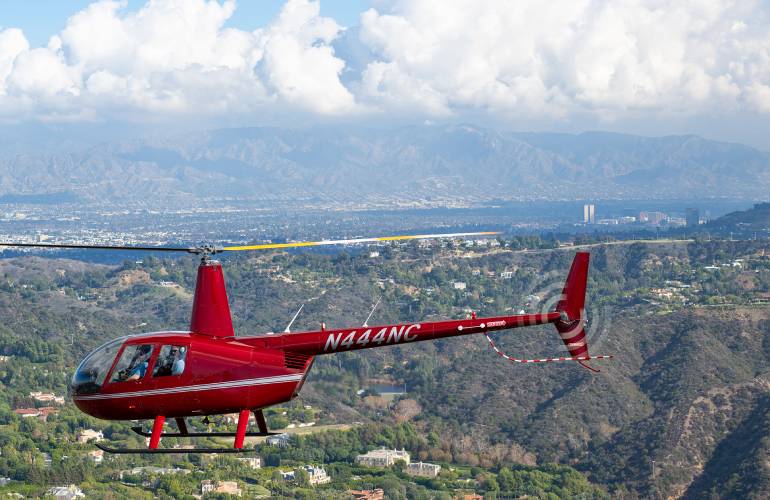
From vetted rooftops to the shoreline, coastal-to-downtown hops turn LA’s lateral congestion into short, controlled segments under defined corridors. You depart from helistops with documented approach plates, then track along published VFR routes that parallel the coast before shifting inland via Class B shifts coordinated with SoCal TRACON. The result: predictable block times, minimal vectoring, and continuous comms.
You’ll leverage sea-breeze stability and lower turbulence profiles over water to maintain smoother airspeeds, then pivot inland over urban landscapes using predefined altitudes that deconflict with fixed-wing streams. Operators file company flight releases, comply with noise-abatement profiles, and adhere to curfews and TFR avoidance. Expect rapid descent planning, tight landing minima, and expedited ramp turns—while passengers enjoy coastal views without sacrificing schedule fidelity.
Skipping Freeway Choke Points
How often do bottlenecks at the 405/10, 101/110, or Sepulveda Pass erase your margins? You can bypass those friction points with point-to-point aerial navigation that ignores surface traffic patterns entirely. Helicopter charters file compliant VFR routes, leverage published helicopter passage corridors, and coordinate with SoCal TRACON for deconfliction and priority sequencing. You depart from rooftop or proximate heliports, execute a direct leg, and land closer to your endpoint, eliminating last-mile drag.
Stress-Free Transfers to and From LAX
You bypass freeway gridlock with predictable wheels-up and touchdown times, modeled against INRIX congestion data and FAA slot availability. From rooftop or FBO to LAX in minutes, you’ll meet published helicopter approach procedures and TSA/CBP requirements without schedule creep. On arrival, coordinated curbside handoffs—via authorized commercial vehicle lanes and badged escorts—give you seamless terminal connections.
Skip Freeway Gridlock
While peak-hour volumes push I-405 and I-105 to Level of Service E–F, a helicopter transfer bypasses surface congestion and compresses LAX access times to predictable, slot-controlled minutes. You leverage controlled airspace, IFR-capable routes, and noise-compliant profiles to maintain schedule integrity, even when roadway V/C ratios exceed design thresholds. The helicopter benefits are quantifiable: reduced variance, shorter door-to-runway legs, and resilient urban mobility unaffected by incident-induced delays.
- Route efficiency: Utilize predefined heli corridors and ATC deconfliction to avoid chokepoints, eliminating stochastic delay from incidents, work zones, and ramp meters.
- Schedule reliability: Apply PBN and RNP procedures to standardize approaches, constraining ETA error bands to minutes, not tens
- Regulatory alignment: Operate under Part 135 with SMS, curfew adherence, and Part 36 noise standards, ensuring compliant, community-conscious transfers.
Minutes to the Terminal
Thirty predictable minutes or less from rooftop to LAX curb is achievable by pairing city helipads with slot-coordinated arrivals, predefined helicopter routes, and direct-to-FBO ground handoffs. You bypass freeway volatility with time-on-target operations: file VFR or IFR as needed, follow published LA Basin helicopter routes, and leverage priority sequencing coordinated with SOC and FBO dispatch. With helicopter efficiency, you minimize taxi, climb, and vectoring time; typical sector times run 8–14 minutes from DTLA, 12–18 from the Westside. ATC flow programs, TFRs, and marine layer ceilings are mitigated via alternate procedures and contingency minimums. On touchdown, ramp-access vehicles execute secure, airside-to-curb transfers under TSA and airport ops protocols. That’s luxury travel quantified: predictable block times, audited SOPs, and compliance-driven reliability.
Seamless Curbside Connections
Even before skids touch down, curbside is sequenced like a handoff in a control tower: SOC pre-assigns an FBO stand, files ramp-access credentials, and dispatches a bonded driver to the exact gate with AOA permissions under TSA Part 1542 and LAX Ops rules. You step from rotorwash to vehicle in minutes, eliminating terminal choke points. The result: curbside efficiency measurable in cycle-time reduction and zero dwell.
- SOC workflow: slot confirmation (EDCT-compliant), FBO coordination, and driver ETA synced via ADS-B and surface-movement data for sub-5-minute variance.
- Security chain: verified STA/TWIC, vehicle escorts per ACM, and IDMS validation to maintain sterile-area integrity and passenger convenience.
- Baggage flow: ramp-to-trunk transfer, weight-and-balance reconciled, and final-mile routing optimized with geofenced staging to prevent curbside recirculation.
Cost, Value, and When It Pays Off
Although sticker shock is common, you should evaluate helicopter charter through total cost of time saved, schedule reliability, and risk-adjusted value. A disciplined cost analysis compares hourly charter rates to the fully loaded cost of your time: billable hourly rate, team utilization, and opportunity cost of missed windows. Include ground transfer latency, congestion variability, and buffer time you’d otherwise pad into road itineraries.
Run a value comparison: if a 12-minute flight replaces 90–120 minutes of peak LA traffic, the time arbitrage often offsets the premium. Factor mission-critical use cases—multi-stop site visits, investor meetings, or hard curfews—where delay risk carries high downside. Consider scalability: shared charters lower unit cost per seat, while recurring routes justify memberships. When timelines are tight, decisions high-stakes, and calendars inflexible, helicopter charter pays off.
Safety, Regulations, and What to Expect Onboard
Before you book, anchor expectations to the regulatory framework and operator safety programs. You’ll want Part 135 certification, SMS implementation aligned with ICAO Annex 19, and audited maintenance under OEM task cards. Ask about FOQA/HEMS-lite data monitoring, pilot currency (IFR, NVG), and weather minima. Helicopter safety hinges on disciplined SOPs, weight-and-balance accuracy, and redundancy culture.
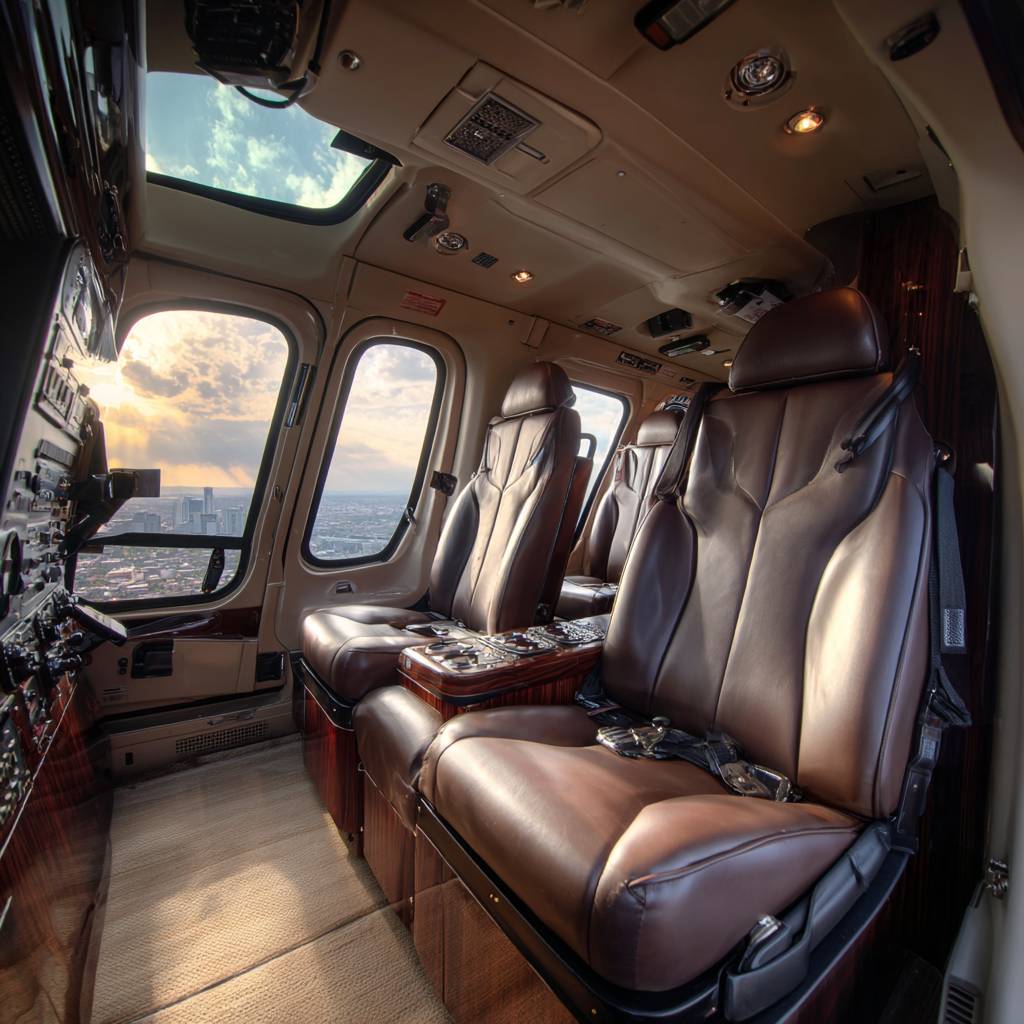
Your onboard experience is streamlined: brief, board, buckle, fly. Expect noise-attenuating headsets, real-time flight following, and precise load management. Pilots will review emergency egress, ELT location, and sterile-cockpit phases.
- Verify: Part 135 ops specs, pilot time-in-type, last FAA or third‑party audit date.
- Confirm: MEL/CDL policy, HUMS capability, and dispatch risk matrix thresholds.
- Expect: seatbelt/shoulder harness use, headset protocol, and secure baggage limits.
Popular LA Corridors and Real-World Use Cases
Slide into the LA airspace with purpose: most charter hops trace FAA VFR helicopter routes that skirt Bravo shelves, follow published noise‑abatement corridors, and thread along the 405/110/101/5 for predictable ATC handoffs and obstacle clearance. You’ll leverage the Special Flight Rules Area, Mini Route alternates, shoreline shifts, and SFRA waypoints to minimize vectoring and fuel burn while preserving aerial views.
Use cases: LAX to DTLA via the 110 corridor for 12–15 minute CBD access; Santa Monica to Burbank using the 405/101 split, maintaining 1,500–2,000 MSL per charted guidance; Malibu to Pasadena along the shoreline then inland to avoid P-56 and stadium TFRs. Night ops employ IFR-capable platforms with HTAWS and ADS‑B In/Out, while day VFR prioritizes density altitude, noise curfews, and slot coordination.
Conclusion
In LA’s 64-hour annual congestion grind (INRIX), you gain predictable, point-to-point times. Imagine this: you book Van Nuys–DTLA at 08:00; ATC slot confirmed, Part 135 operator, dual-pilot IFR, 12-minute block-to-block. Your SUV airside transfer meets TSA-secure perimeter; weight-and-balance cleared via e-manifest; noise-abatement route filed; MEL clean. You skip the 405’s 30–75 minute variance, land atop your meeting, and depart to LAX with a sterile transfer, shaving 60–90 minutes while staying fully compliant.