
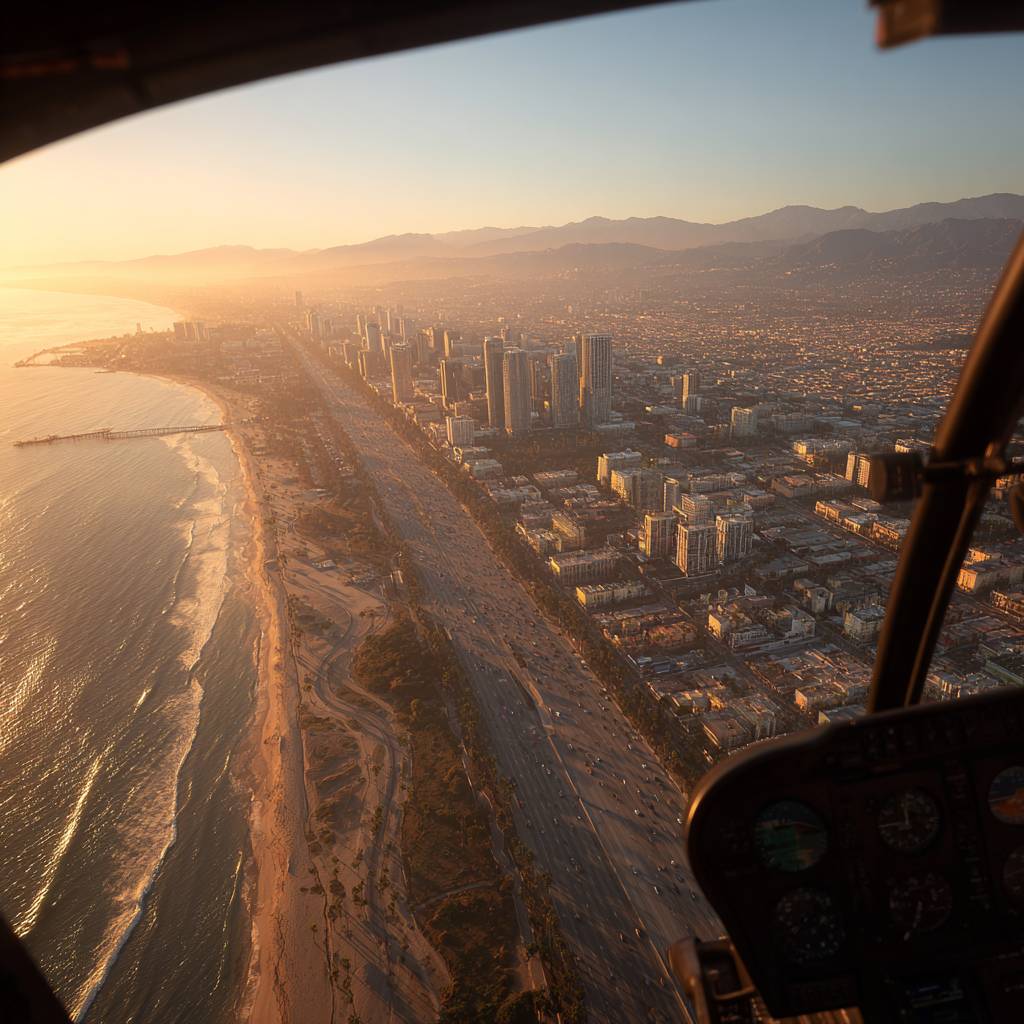
You’ll get cinematic helicopter shots by planning backward from the sun: map a clean arc, lock headings and altitudes, and build a tight shot list of orbits, parallax passes, reveals, and exit lines. Treat the cabin like an open-air set—go door-off only with a proper harness, locked carabiner, and every loose item tethered. Choose forgiving wide-to-short zooms, manage stabilization wisely, and shoot manually with ND and steady shutter cadence. Next, you’ll tighten callouts and timing.
Plan the Helicopter Shoot: Route, Sun, Shot List
Where do you want the helicopter to be when the light turns cinematic? Lock that answer first, then build everything backward from sun angle, weather, and airspace. Use route planning to map a clean arc that keeps your subject front- or side-lit, avoids sun glare in the lens, and provides the pilot with predictable turns. Time golden hour with checkpoints, not guesses: minute marks, headings, and altitudes.
Translate vision into shot list ideas the crew can execute: establishing orbit, push-in along a ridge, parallax pass over texture, reveal from shadow to highlight, and a final exit line. Pre-brief callouts (“start left bank,” “hold 80 knots”) so timing stays tight and decisions stay calm.
Cover Helicopter Filming Safety: Harness, Doors, Loose Gear
How do you keep a cinematic shot from becoming a safety incident the moment the door comes off? You treat the cabin like an open-air set with rotorwash and hard limits. Before startup, confirm the operator’s door-off procedures, weight-and-balance, and briefed signals. Clip in before you unbuckle, and verify harness safety: correct attachment point, locking carabiner, no twists, and a length that prevents leaning past the skid line. Keep your body inside the cabin at all times, even when framing.
Eliminate loose gear. Tether every item: camera, caps, phones, checklists, even lens cloths. Zip pockets, tape dangling straps, and stow batteries in closed pouches. If it can fly, it can strike a rotor or a bystander.
Choose Helicopter Lenses and Stabilization (Handheld vs Gimbal)
When you’re strapped in with the door off and the aircraft vibrating under you, lens choice and stabilization decide whether your footage feels like a controlled tracking shot or an unreadable shake test. Start with a lens comparison: wider primes or short zooms (24–70) keep motion forgiving and emphasize scale; longer glass (70–200+) compresses landscapes but magnifies every rotor tremor and requires stricter framing discipline. Favor internal zoom/focus to reduce balance shifts, and use hoods to cut flare without catching wind.
Now weigh stabilization tradeoffs. Handheld with in-body or optical stabilization stays agile for quick pans, but you’ll fight fatigue and micro-jitter. A gimbal delivers floating, cinematic moves, yet adds bulk, power, and snag risk—tether it, lock axes for transport, and keep it inside the cabin line.
Set Camera Settings for Helicopter Vibration and Speed
A helicopter’s vibration and forward speed punish sloppy exposure choices, so you’ll lock in settings that protect sharpness and keep motion looking intentional. Shoot manual exposure, then set the shutter to tame micro-jitter: for 24/25/30p, start at 1/100–1/250, adjusting for focal length and airframe buzz. Maintain a consistent shutter cadence across takes; use an ND filter to hold your aperture and avoid ISO spikes. For stills, push 1/1000+ and burst to beat rotor-induced blur. Prefer global-shutter cameras; if you’re on CMOS, mitigate rolling shutter by avoiding whip pans and keeping shutter faster than “cinema” when vibration demands it. Enable lens/IBIS only if it doesn’t oscillate, and always secure straps to prevent cockpit snags.
Brief the Pilot: Callouts for Passes, Orbits, and Spacing
Radio discipline turns your shot list into a safe, repeatable flight plan. Before lift, you brief passes, orbits, and abort cues so the pilot can fly smoothly while you chase cinema. Nail callout timing: speak early, short, and consistent—“30 seconds to pass,” “rolling in,” “on heading,” “clear.” Define orbit spacing in feet or meters, plus altitude blocks, so rotor wash and parallax don’t ruin the frame or margins. Confirm which side’s “hot,” where doors stay, and how you’ll signal “knock it off.” Your voice becomes the stabilizer that innovation needs.
- Say target, direction, speed: you feel control.
- Call “steady” and watch the skyline lock.
- Request “widen 200” and breathe.
- End with “break right, climb,” and stay alive.
Conclusion
When you lift off, your plan becomes a flightpath traced in light. You’ve checked the route, chased the sun, and built a shot list that fits the airspeed. You’re clipped in, doors off, gear locked down—nothing loose, nothing casual. You’ve matched lens choice to stabilization, tuned shutter and frame rate to vibration, and kept ISO disciplined. With clear callouts, the pilot carves passes and orbits, and your footage lands smoothly, safely, and cinematic.