"*" indicates required fields
You beat LA traffic by lifting off above the 405’s choke points, signal cycles, and on-ramp metering, then flying direct GPS legs at 110–140 knots. What’s a 60–120 minute crawl on the ground becomes a 10–25 minute hop with predictable pad access and reliable ETAs. After a quick safety brief and rotor spool-up, you climb through marine haze and canyon winds into clean sightlines of beaches, DTLA, and Hollywood. Keep going to see routes, costs, and photo setups.
How much time can you actually save by lifting off instead of merging onto the 405? You can turn a 60–120 minute crawl into a 10–25 minute airborne hop, because you bypass choke points, signal cycles, and on-ramp metering. After a brief safety brief and rotor spool-up, you climb above the congestion layer and ride direct GPS legs at 110–140 knots. You still budget for check-in and pad access, but your schedule becomes predictable: fewer variables, tighter ETAs, cleaner handoffs. That reliability unlocks beach accessibility when parking and surface approaches stall, and it gives you serious traffic alternatives for meetings, events, or a last-minute sunset plan. You’ll feel the city shrink beneath you.
You’ll track the coastline on a beachflight leg, holding a steady altitude for clean sightlines over surf breaks, piers, and cliff edges while the pilot calls out airspace boundaries. Then you’ll pivot inland on a downtown-to-Hollywood sky route, threading controlled corridors above DTLA’s towers before lining up the ridge for a straight shot to the Sign. Each route swaps gridlock for speed and situational awareness, and you’ll feel the city’s geography snap into place from the cockpit.
Ever wondered what LA’s shoreline looks like when you trade gridlock for rotor wash? You lift off and slot into optimized coastal flight paths, tracking the surf line with GPS-stabilized precision. The cabin stays smooth as the pilot trims power and banks, revealing coastal scenery in crisp, cinematic layers—piers, breakwaters, and sunlit swells sliding beneath you like real-time data. You’ll feel the city’s noise drop away while the ocean’s geometry takes over.
Where the freeway knots up below, the Downtown-to-Hollywood sky route runs clean and direct—lifting off over DTLA’s glass-and-steel grid, then tracking a tight corridor past Dodger Stadium and the silver ribbon of the 101 toward the Hollywood Hills. You’ll feel the aircraft translate power into forward lift as the pilot holds altitude and airspeed within noise-abatement bands and layered air traffic flows. From above, city planning turns legible: street hierarchies, rail spines, and infill blocks snap into a systems diagram. You bank north, keep the skyline off your left skid, and watch Griffith Park open like a green buffer. Then the Hollywood sign resolves on the ridge, crisp and close, while you bypass every stalled on-ramp in seconds, safely.
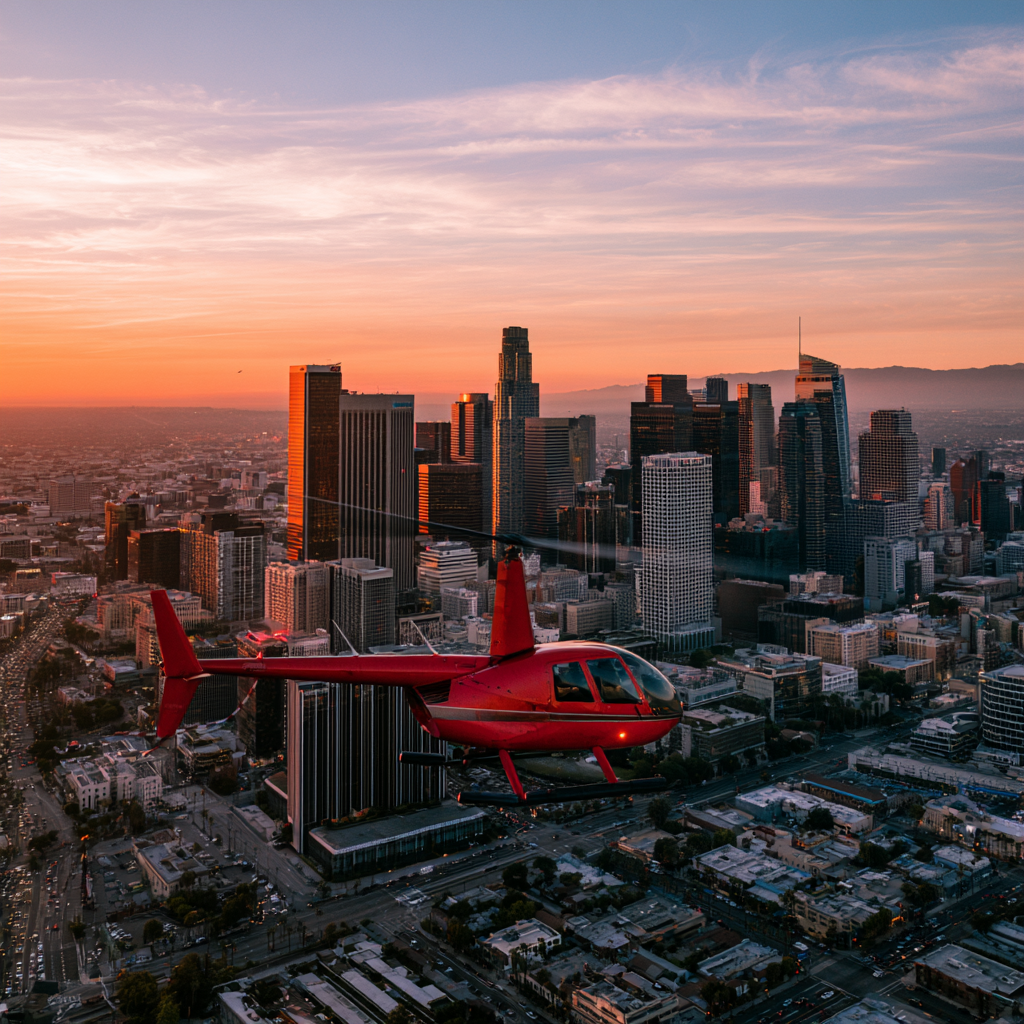
You’ll lock in iconic skyline vantage points as the pilot banks for clean sightlines of DTLA and Hollywood, giving you crisp framing through the bubble window. You can time coastline passes for golden-hour angles, using the horizon line and sun position to capture saturated sunset shots over the Pacific. For landmark flyovers, you’ll stabilize your camera with a fast shutter, shoot in burst mode, and track the subject through the turn to keep it sharp and centered.
How does LA’s skyline look when traffic shrinks to a grid beneath you? From altitude, the iconic skyline turns architectural—clean lines, mirrored facades, and shadow geometry you can’t read from street level. Your pilot banks for parallax, giving you layered depth from Downtown towers to ridgelines, while vibration-damped mounts keep your helicopter photography razor-sharp.
Shoot fast: 1/1000, ISO adaptive, stabilization on, eyes scanning for reflections.
As the sun drops toward the Pacific, the coastline snaps into high-contrast layers—gold water, dark headlands, and a ribbon of beach that reads like a contour line from altitude. You’ll feel the cabin vibrate as you bank, and the horizon shifts like a live histogram, squeezing highlights and deepening shadows in real time.
For coastline photography, you get clean, oblique angles that separate surf texture from wet sand, while kelp lines draw leading vectors offshore. Watch for specular glints on the water; they’ll punctuate your frame like sensors catching signal. Your sunset composition gets stronger as the rotorcraft tracks parallel to shore, giving you a controlled parallax effect: cliffs slide, waves pulse, and the sky gradient stays smooth without streetlight contamination.
Where do the iconic frames actually happen on an LA helicopter tour—when the pilot sets you on a clean lateral line and the landmark slides through a predictable window of light. You’ll get your sharpest results by previsualizing the pass: lock a fast shutter, shoot through the bubble’s cleanest section, and keep the horizon level as the city tilts beneath you. Watch landmark lighting; the second you see edge glow on the Hollywood Sign, Griffith Observatory, or DTLA towers, start your burst and ride the parallax.
Ever wonder why Los Angeles helicopter tour prices swing so widely? You’re not just buying airtime—you’re funding a tightly engineered flight. Your cost breakdown usually starts with aircraft type and seat count: turbine power, rotor efficiency, and cabin acoustics drive hourly rates. Next comes route complexity and airspace coordination, including ATC sequencing over the Basin and shoreline corridors. You also pay for certified pilots, maintenance cycles, and fuel burn that spikes with hover time and payload. Many operators bundle noise-cancel headsets, two-way intercom, and stabilized doors-off rigs for cinematic shots. Add insurance, airport fees, and sunset premiums when demand peaks. Finally, plan for tip expectations if a ground crew handles briefing, loading, and postflight media.
Picking the right LA helicopter tour starts with one question: what view do you want to optimize—coastline sweep, skyline geometry, Hollywood landmarks, or a sunset run through controlled airspace? Match the route to your mission, then compare flight profiles: orbit time, altitude windows, and whether doors-off photography is offered. Vet the operator’s pilot training standards and local airspace fluency, so your narration and timing feel engineered, not improvised. Choose a departure point that minimizes ground transfer friction, and book the slot that best aligns with lighting angles and marine-layer patterns. Lock in travel etiquette early: arrive streamlined, pack camera tethers, and keep comms crisp.
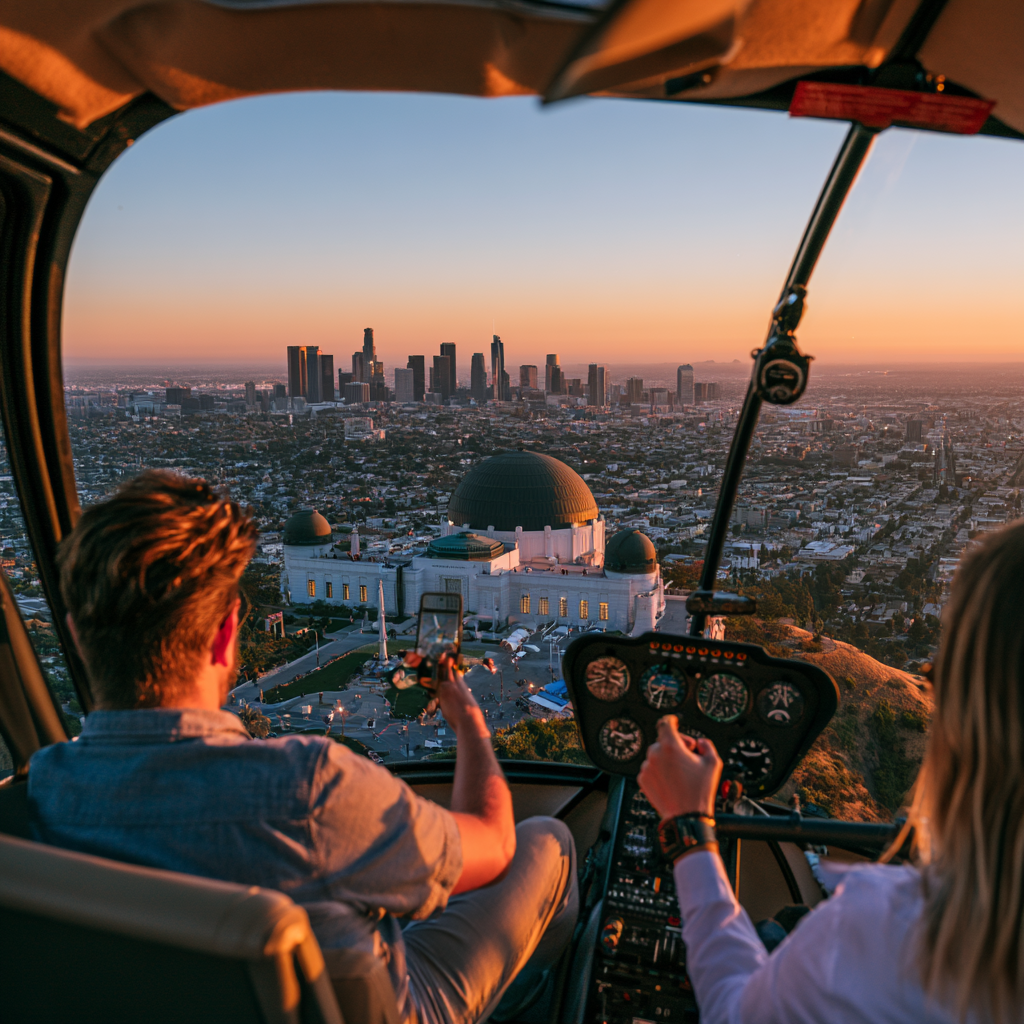
A helicopter tour in LA runs on margins—checklists, microclimates, and cockpit discipline—so you’ll feel equal parts adventure and engineered calm from the moment the pilot briefs you. You’ll get a headset, a seatbelt check, and a quick run-through of doors, life vests (if coastal), and sterile-cockpit moments—core safety protocols that keep the ride predictable.
LA airspace stacks layers: coastal marine haze, canyon winds, and rooftop thermals. Your flight time and route flex with weather dependencies, visibility minimums, and ATC flow, not guesswork. Once the rotor spools, you’ll feel a smooth lift, vibration tuned by dampers, and a panoramic scan of freeways below. You’ll hear altitude callouts, traffic advisories, and the turbine’s steady hum as the city compresses into a clean, fast line.
Wear layered, streamlined gear: a light jacket or windbreaker, breathable shirt, and long pants. Choose closed-toe shoes with good grip, since you’ll step on hard pads and may face rotor wash. Follow wear etiquette: skip loose hats, dangling scarves, and oversized bags. Pack wardrobe staples like sunglasses and sunscreen, but secure everything. Go dark, non-reflective fabrics to cut glare, and keep pockets zipped for safety.
Yes—LA helicopter tours often have age restrictions and weight limits, but they vary by operator and aircraft. You’ll usually need a parent/guardian if you’re a minor, and infants may be limited for safety. For weight, operators may set per-seat caps or require accurate passenger weights to calculate load, balance, and fuel margins. If you exceed limits, you can book extra seating or choose a larger airframe.
Yes—you can usually bring a service animal, but you typically can’t bring a pet. Like a compass needle snapping north, your planning should lock onto the operator’s pet policies: FAA and safety rules often restrict cabin cargo, noise exposure, and restraint systems. You’ll need advance notice, documentation, and a harness or carrier plan. Some tours offer ground-side accommodations if the aircraft can’t safely host animals. Call ahead before booking.
Motion sickness isn’t common on helicopter tours, but you can feel it if you’re sensitive to vibration and rapid yaw. In Los Angeles air, you’ll reduce risk by choosing a front seat when available, eating light, hydrating, and fixing your gaze on the horizon. Use prevention strategies like ginger, acupressure bands, or doctor-approved medication. You’ll also want fresh airflow, steady breathing, and minimal head-down screen time.
Yes—you’ll find many helicopter tours that offer a private charter for proposals or special events. You’ll book the aircraft exclusively, choose departure times, and often customize routes, music, and onboard photo setups. For proposal ideas, you can coordinate a hover over a landmark, a rooftop landing (where permitted), or a timed reveal with ground crew signage. You’ll handle weight limits, weather minima, and FAA constraints with your operator.
You trade gridlock for lift-off, shaving hours as the rotor turns traffic into a static map below. In minutes, you stitch beaches to DTLA to Hollywood like a fast, precise flight plan, framing skyline, surf, and sign in clean, vibration-tinged shots. You’re not just paying for a seat—you’re buying altitude, routing, and a safety-checked machine built for margins. Pick the right tour, watch the weather, buckle in, and let LA unfold.