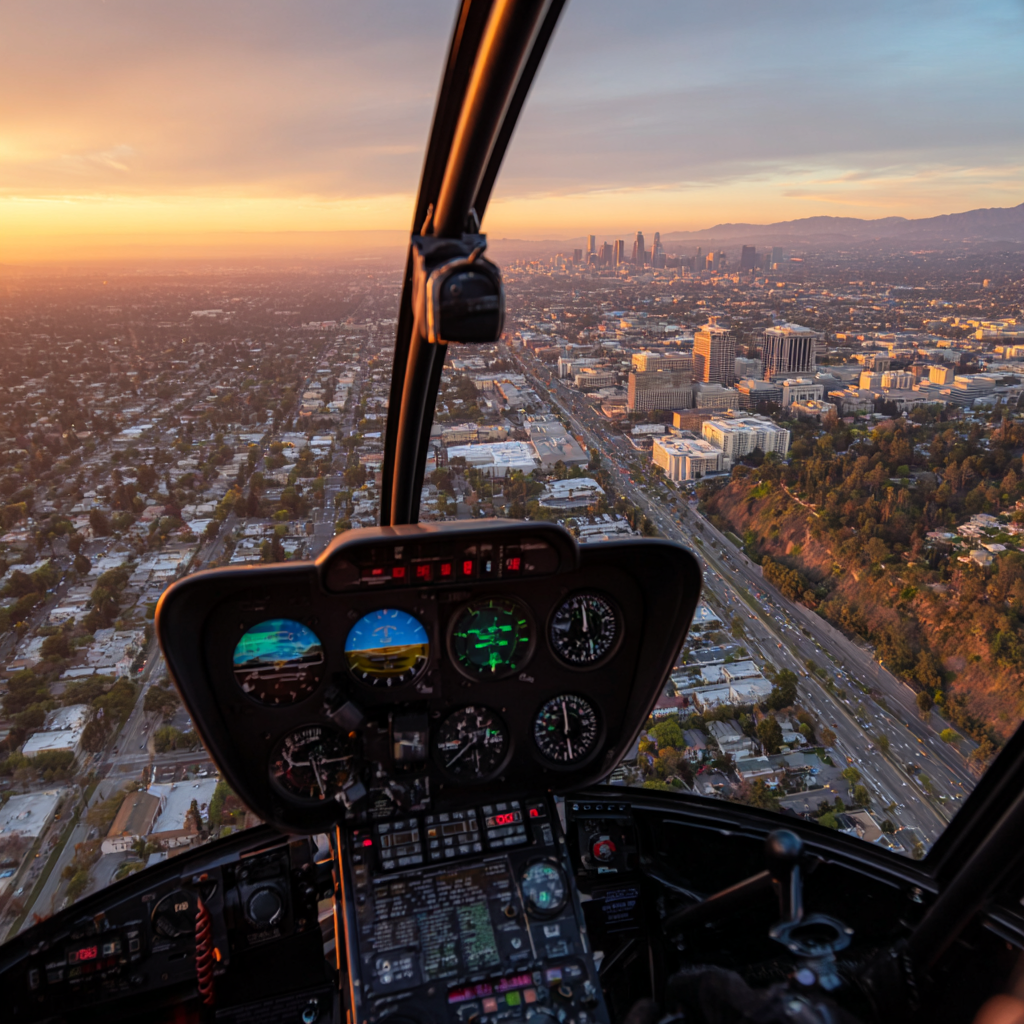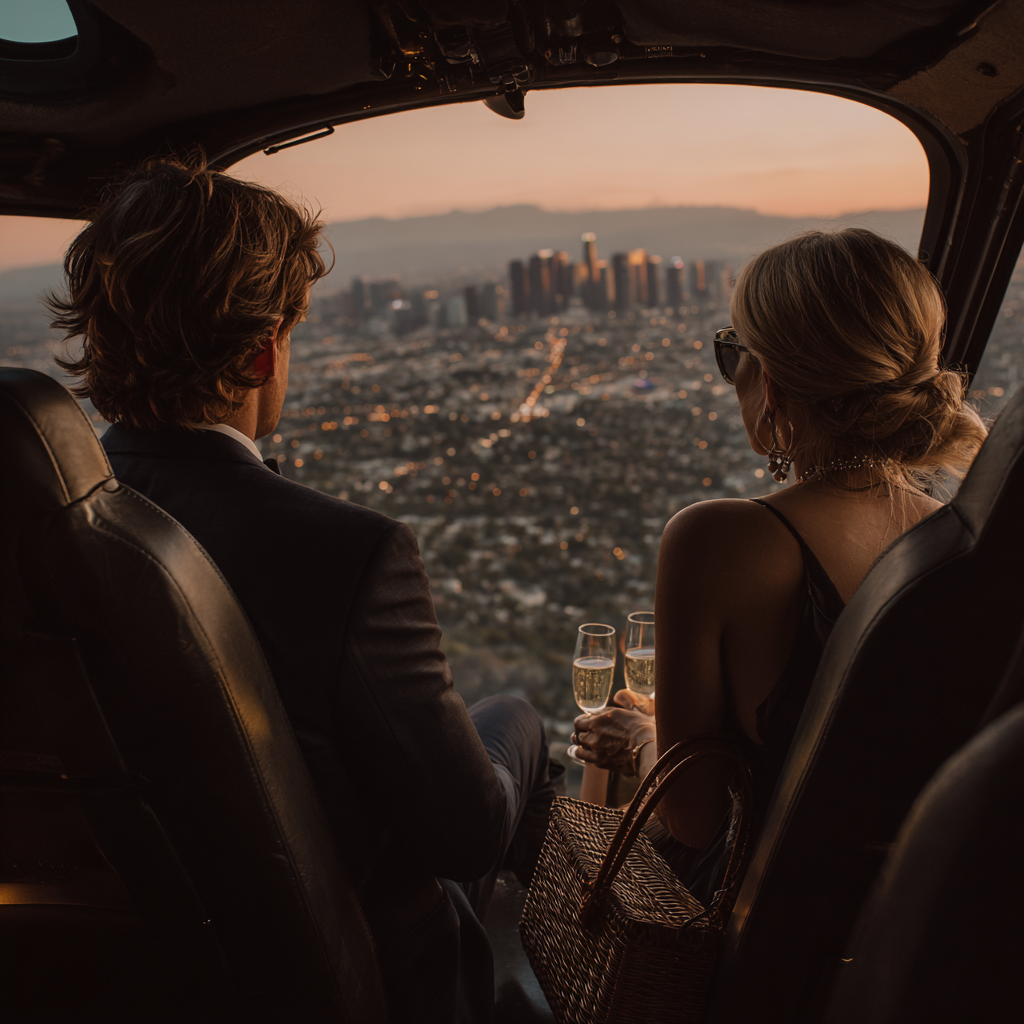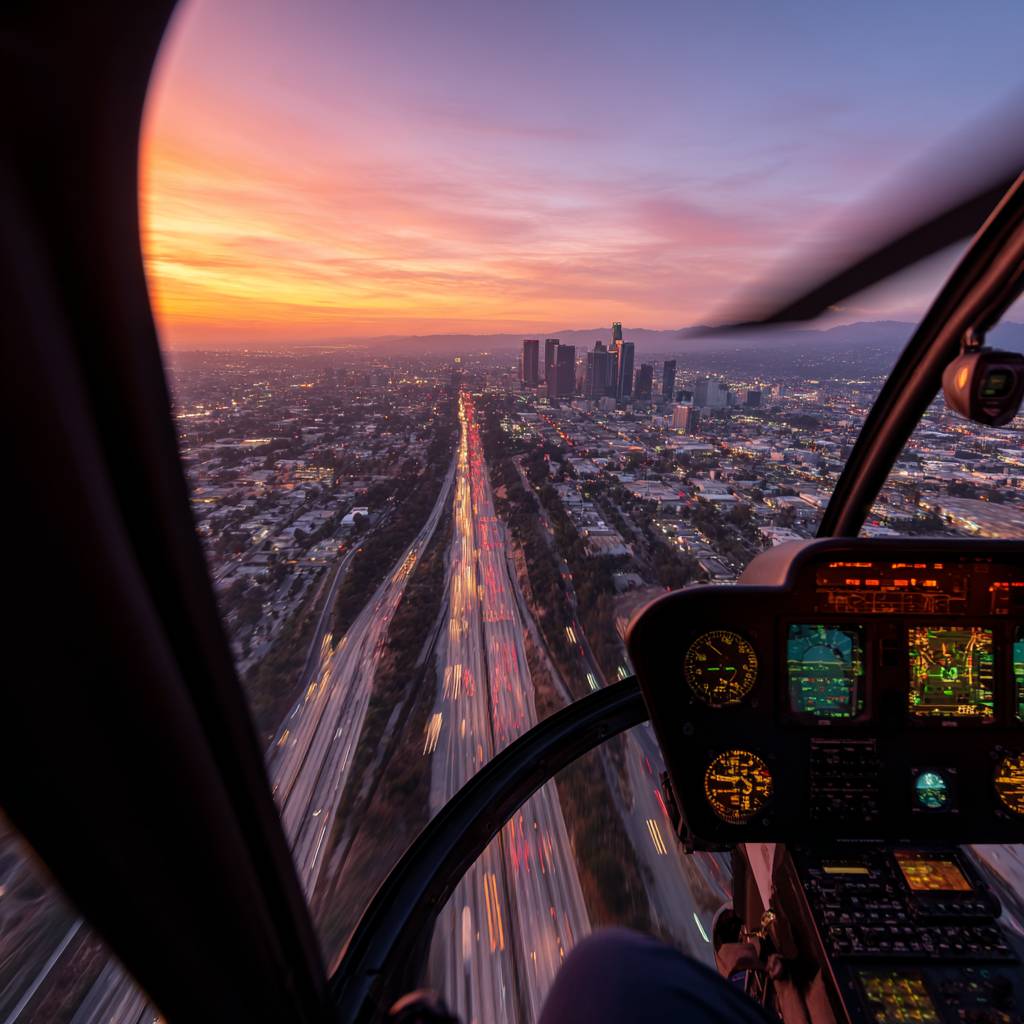

Pick sunset for dramatic color and typically smoother, cooler air; pick daytime for crisp landmark visibility and easier navigation cues. Expect more haze at midday, but maximum illumination for detail; golden hour flatters skin tones but requires higher ISO and faster shutter speeds. Marine layers can obscure coasts mornings/evenings—verify METARs/TAFs for ceiling/visibility. Motion‑sensitive? Choose seats near the center of gravity; doors‑on boosts comfort. Arrive 45–60 minutes early for LA traffic. Next, match timing to your priorities, weather, and budget.
What You’ll See: Landmarks and Scenery by Day vs. Dusk
While daytime flights give you sharp, high-contrast views for easy orientation, sunset runs trade precision for drama. In full daylight, you’ll identify the grid fast: freeway corridors, the LA River, and coastline edges read cleanly, so landmark highlights like the Hollywood Sign, Griffith Observatory, and the Getty Center are easy to verify at a glance. You’ll also read surface textures—pier pilings, canyon ridgelines, studio lots—useful for situational awareness.
At dusk, you’ll trade crisp terrain cues for scenic contrasts. The basin’s lighting grid defines neighborhoods, runway alignments, and harbor perimeters, while silhouettes separate mountains from urban mass. You’ll still confirm waypoints using major boulevards and reflective water bodies, but you’ll pace turns and approaches conservatively, accounting for changing glare, deeper shadows, and evolving horizon definition.
Light and Color: Photography and Videography Considerations
You’ll get warm, directional light during golden hour, which flatters skin tones and reduces harsh shadows, but you’ll need to manage low shutter speeds and cabin reflections with a lens hood and polarizer. Midday brings maximum illumination and faster shutter headroom, yet LA’s coastal haze can flatten contrast and shift color temperature toward blue-gray. Balance safety and image quality: secure gear with tethers, keep straps clear of controls, and plan ISO/aperture to maintain stabilization margins.
Golden Hour Glow
As the sun drops toward the horizon, its low angle delivers softer, longer-wavelength light that compresses contrast and warms the scene—ideal for clean exposures over reflective surfaces like the Pacific and glass high-rises. For golden hour photography, you’ll capture a broader dynamic range with less risk of clipped highlights, while the sunset color palette enhances skin tones and skyline silhouettes. Use a fast shutter to stabilize rotor vibration; pair it with ISO 200–400 and f/4–f/5.6 for sharp, low-noise frames. Shoot perpendicular to the sun to minimize flare; request doors-off or pre-cleaned windows to reduce reflections. Brief your pilot on orbits and headings that keep key subjects side-lit. Strap lanyards, secure loose gear, and enable lens hoods before lift-off.
Midday Clarity vs. Haze
Midday light can deliver crisp, neutral color and deep acuity when marine layer retreats, but it also amplifies haze, glare, and hard-edged shadows that challenge meters and codecs. You’ll gain maximum midday visibility for coastline geometry, freeway grids, and architectural lines, yet haze effects rise with thermal mixing and urban particulates. Manage contrast by exposing for highlights, then lifting shadows in post; log or flat profiles help preserve sky detail. Use circular polarizers sparingly—oblique angles over water reduce glare, but excessive polarization can band skies and stress codecs. Keep shutters near 180° to avoid prop strobing; set white balance to daylight for consistent color. For safety, brief the pilot on orbit headings that minimize sun angle and turbulence-induced roll.
Weather and Visibility: Marine Layer, Haze, and Seasonal Factors
Though LA boasts flying weather most days, visibility swings with the marine layer, urban haze, and season. You’ll plan smarter if you track ceiling, slant-range visibility, and sun angle together. In spring and early summer, the marine layer often pushes inland mornings and evenings, dropping ceilings and hiding coastline landmarks; midday burns it off, but photochemical haze can persist. In fall, offshore flow sharpens edges and extends sightlines. These seasonal variations matter: winter brings clearer post-frontal air but faster dusk; summer offers longer light but more scatter.
Check METARs/TAFs from KLAX, KHHR, and KVNY for ceilings and prevailing visibility, then compare satellite loops for stratus extent. Aim for windows with 10+ miles visibility and ceilings comfortably above route altitudes to preserve margin and image quality.
Comfort and Motion: Turbulence, Temperature, and Smoothness
Because comfort shapes both safety and enjoyment, you should anticipate how time of day and local wind patterns affect a helicopter’s ride quality. Midday heating over LA’s basin and canyons increases convective mixing, raising turbulence levels and producing choppy air near hills and high-rises. Late afternoon often eases to light-to-moderate bumps as surface heating wanes; marine influence can further smooth coastal segments. Around sunset, stabilized layers typically deliver the calmest ride, with gentler control inputs and tighter hover precision.
Temperature variations also matter. Cooler evening air is denser, improving rotor efficiency, climb margins, and tail-rotor authority; cabins feel quieter and more stable. Daytime warmth reduces density altitude margins, requiring higher power and yielding a firmer, more reactive feel. Choose sunset for smoother profiles; pick daytime for energetic, technical handling.
Timing and Logistics: Scheduling, Duration, and Traffic to the Heliport
While the skyline steals attention, your clock and commute set the tone of the flight. Build in buffers. LA traffic compresses margins, so target arrival 45–60 minutes before check-in. Validate heliport accessibility: some sites restrict rideshare drop-offs, enforce ID checks, or require advance vehicle registration. Confirm real-time NOTAMs, TFRs, and marine layer forecasts; they can shift wheels-up times and route profiles.
Use scheduling flexibility to avoid peak ground congestion: late morning and early afternoon typically ease ingress compared to rush hours. Standard tour durations run 20–60 minutes; longer sorties amplify weather and airspace variables, so keep contingency windows on your calendar. Verify weight-and-balance cutoffs and daylight constraints for sunset slots. Preload navigation, parking coordinates, and alternate routes, and monitor CHP/Caltrans feeds en route.
Budget and Availability: Pricing Trends by Time of Day
You’ll see consistent off-peak savings on mid-morning and early afternoon slots, when operators balance aircraft utilization and crew hours. Expect prime-time surcharges at sunset, reflecting higher demand, limited daylight availability, and stricter VFR timing. If you’re price-sensitive, monitor dynamic pricing calendars and book early while confirming weather minima and seat-weight limits that can affect final cost.
Off-Peak Savings
If you’re timing for value, compare fares across late-morning, midday, and post-sunset slots to see where operators discount capacity. You’ll often see off peak discounts when dispatch teams project lighter loads and can consolidate aircraft. Monitor dynamic pricing tools and inventory meters; when seats remain T‑24 to departure, rates soften and tour flexibility increases.
Target windows with stable marine layer forecasts and low winds aloft; operators prefer predictable conditions, which reduces scrub risk and rebooking friction. Book refundable fares, then re-scan pricing 48–6 hours out and reissue if the delta exceeds change fees. Ask about shared-cabin matching—filling the last two seats can trigger automatic repricing. Verify duty-time constraints to avoid crew swaps that add costs. Bring verified weight data early; optimized loading keeps you on discounted manifests.
Prime-Time Surcharges
Those off-peak tactics meet their limit once you enter prime demand bands—golden hour, weekend afternoons, and clear post-frontal evenings—where operators stack surcharges to manage scarce slots and higher operating risk. You’ll see prime time pricing reflect tighter airspace coordination, higher ATC sequencing, and stricter duty-time margins for crews. These surcharge effects typically bundle priority dispatch, contingency fuel, and extra preflight checks to preserve schedule integrity when delays cascade.
Expect dynamic add-ons: a time-of-day premium, visibility window protection if marine layer lingers, and passenger-weight balancing to keep performance margins safe in warmer, denser traffic periods. You can hedge costs by choosing shoulder light, confirming wheels-up flexibility, and accepting alternate routing. If you want the signature sunset skyline, budget for premiums and lock a refundable window.
Matching the Experience to Your Priorities and Travel Style
While both sunset and daytime helicopter tours showcase LA’s skyline and coast, match the flight to your goals, tolerance for motion, and camera needs. If your helicopter preference prioritizes smoothness, book daytime when marine layers are predictable and thermals lighter over water. Photographers seeking crisp detail should favor midday illumination; sunset delivers dynamic contrast but demands higher ISO and faster shutters to counter low light and rotor vibration.
Consider your travel experience and comfort with banked turns in coastal winds. If you’re motion‑sensitive, request seats near the center of gravity and noise‑attenuating headsets; confirm whether doors‑on increases comfort versus doors‑off visibility. For innovation‑minded travelers, ask about gyro‑stabilized mounts, polarized window panels, and real‑time ATC reroute flexibility. Always verify operator safety briefings and weight‑and‑balance limits.
Conclusion
You’ve weighed light, weather, comfort, and cost; now choose the window that fits your goals. If you want crisp detail and steadier air, book daytime. If you’re chasing drama—golden hues, skyline glow—aim for sunset, but accept more haze and tighter scheduling. Check marine layer forecasts, wind, and visibility, and confirm flight minimums and safety briefings. Build buffer time for traffic to the heliport. In the end, you’re the pilot of priorities—set your heading and enjoy the ride.