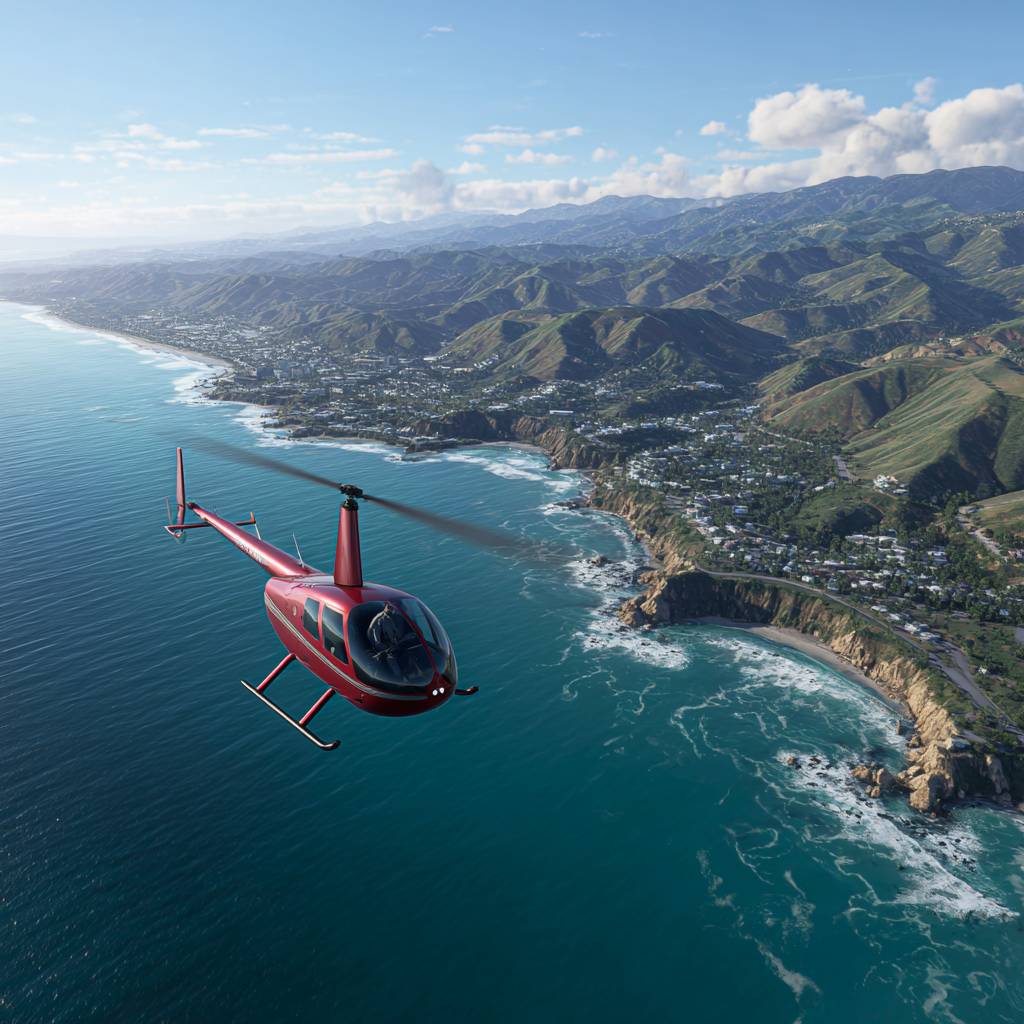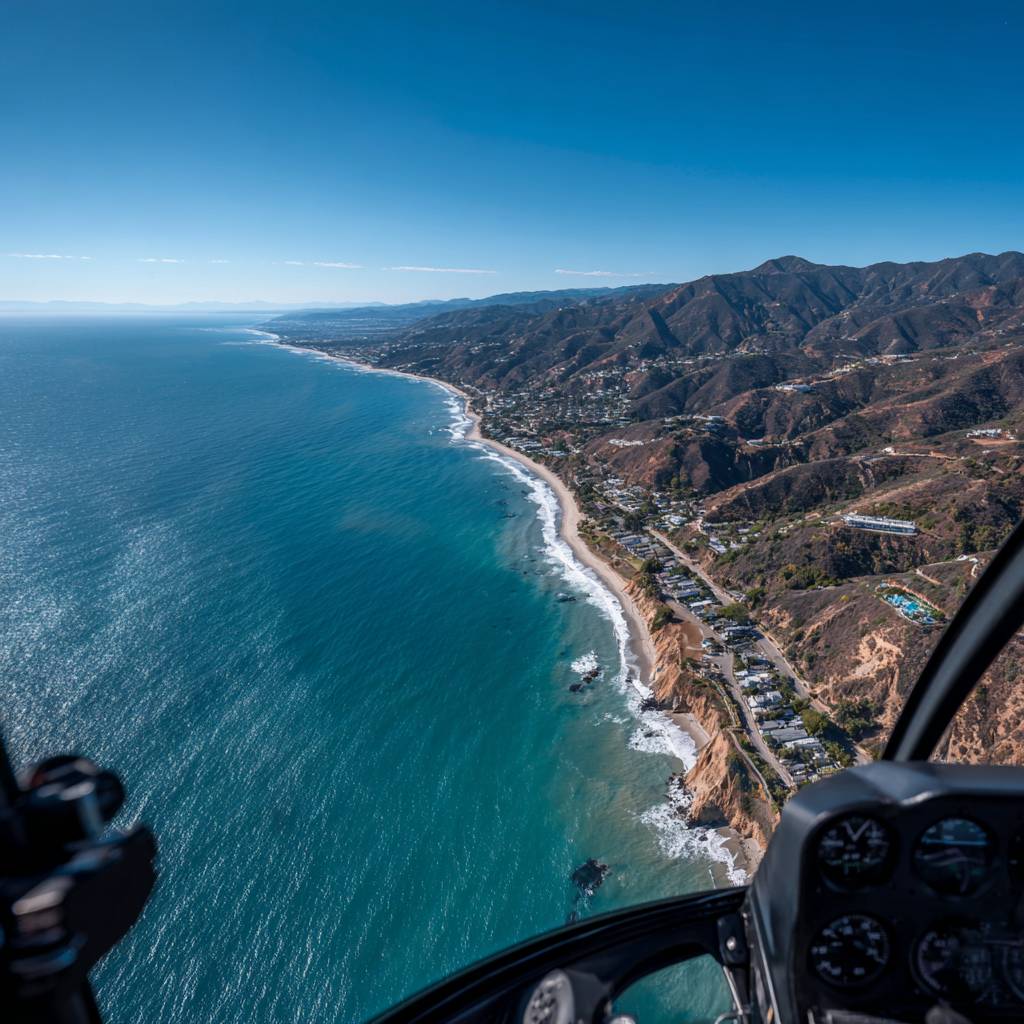
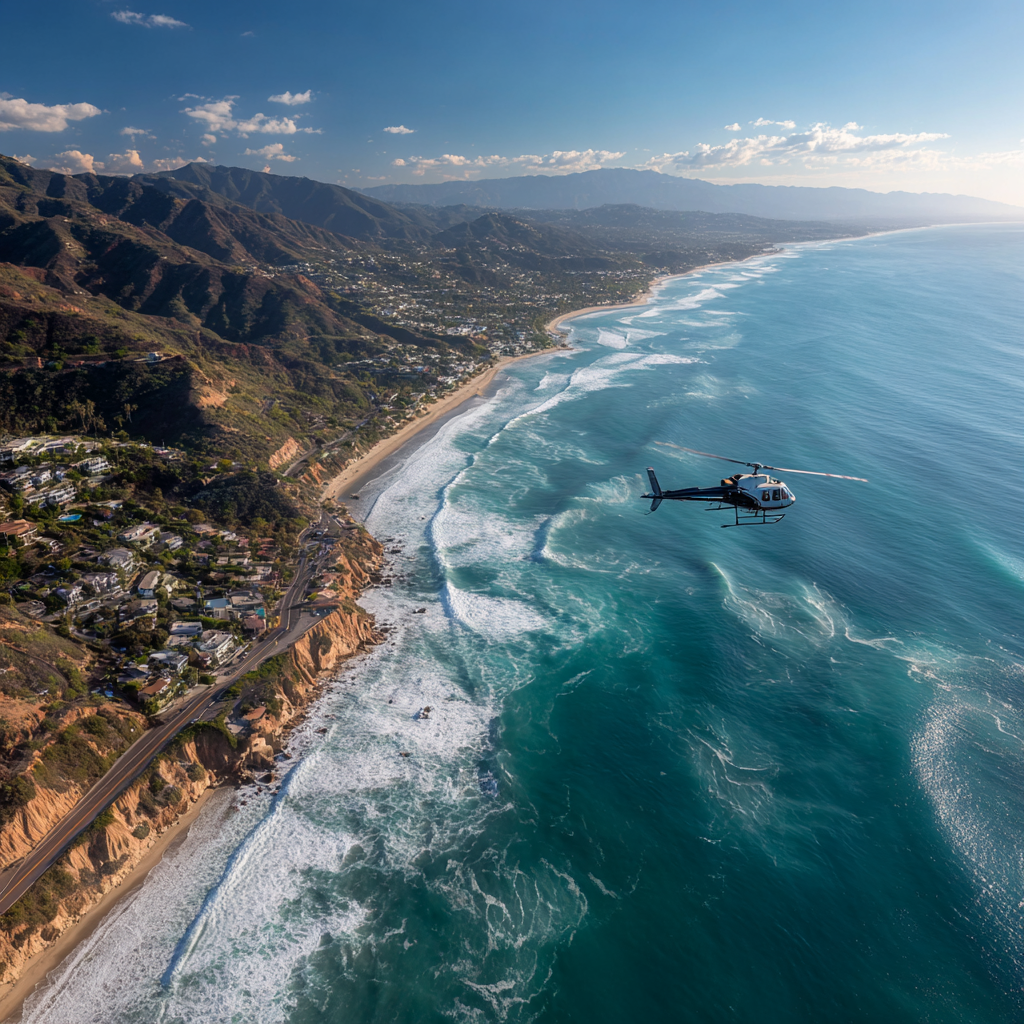
On a Malibu helicopter tour, you’ll map the coastline in minutes with stabilized, wide-angle views that show wave energy tracing sandbars and reefs, kelp beds as dark offshore ribbons, and cliff-cut coves shaping the surfline’s curvature. You’ll transition onto the shore via controlled waypoints from Van Nuys, Burbank, or Ventura-area heliports, with route tweaks for micro-weather and airspace. Choose 20–30 minutes for smooth camera pacing, and prep smart with ID, layers, and a tethered camera—there’s more ahead.
What You’ll See on a Malibu Helicopter Tour
Ever wondered how much of Malibu you can take in from a single flight? You’ll map the coastline in minutes, watching wave energy trace sandbars and reefs like live telemetry. What to expect: stabilized, wide-angle views that reveal spatial relationships you can’t get from the road—cliff faces, coves, and the surfline’s curvature. Scenic highlights include broad beaches, rugged bluffs, canyon mouths, and hillside estates set into the topography. You’ll also spot kelp beds as dark ribbons offshore, plus harbor geometry and breakwater patterns that explain local currents. At altitude, you read Malibu as a layered system: ocean, shore, and mountains aligned in a single continuous frame, optimized for rapid visual capture.
Malibu Helicopter Tour Routes and Departure Points
Once you’ve pictured Malibu as one continuous ocean–shore–mountain system from above, the next variable that shapes your flight is route design and where you lift off. Operators map Malibu routes to balance coastline reveal, altitude windows, and airspace constraints near LAX corridors and local noise-sensitive zones. You’ll typically launch from curated departure points such as Van Nuys, Burbank, or Ventura-area heliports, then transition onto the shoreline via controlled waypoints that keep you clear of high-traffic patterns.
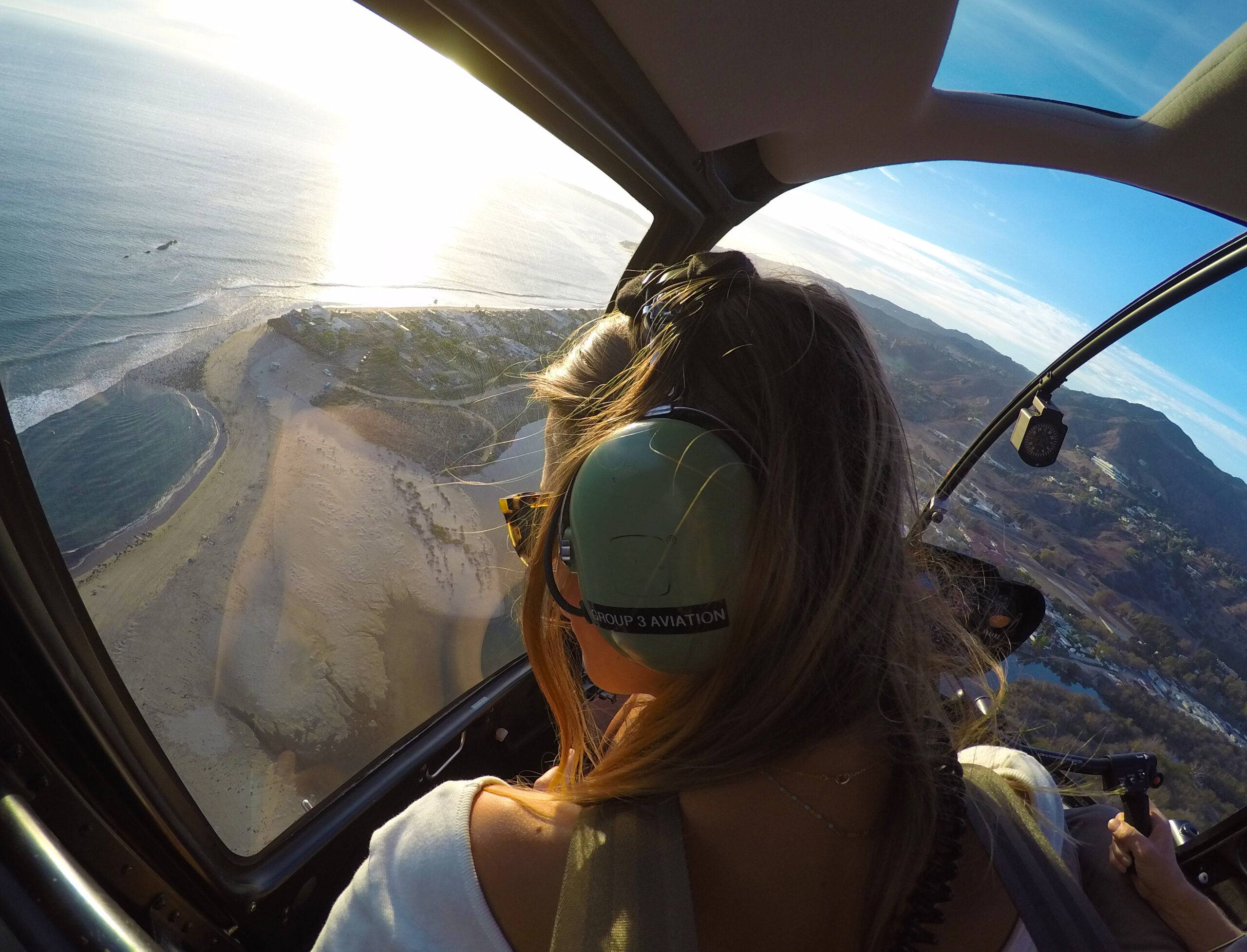
Your pilot will brief you on sightseeing safety via headset comms, sterile-cockpit moments, and planned turns that preserve rotor clearance from ridgelines. Expect weather considerations to drive micro-adjustments: marine-layer ceilings, Santa Ana turbulence, and canyon visibility can shift routing, cruising altitude, and even the coastal entry angle.
How Long Should Your Malibu Helicopter Tour Be?
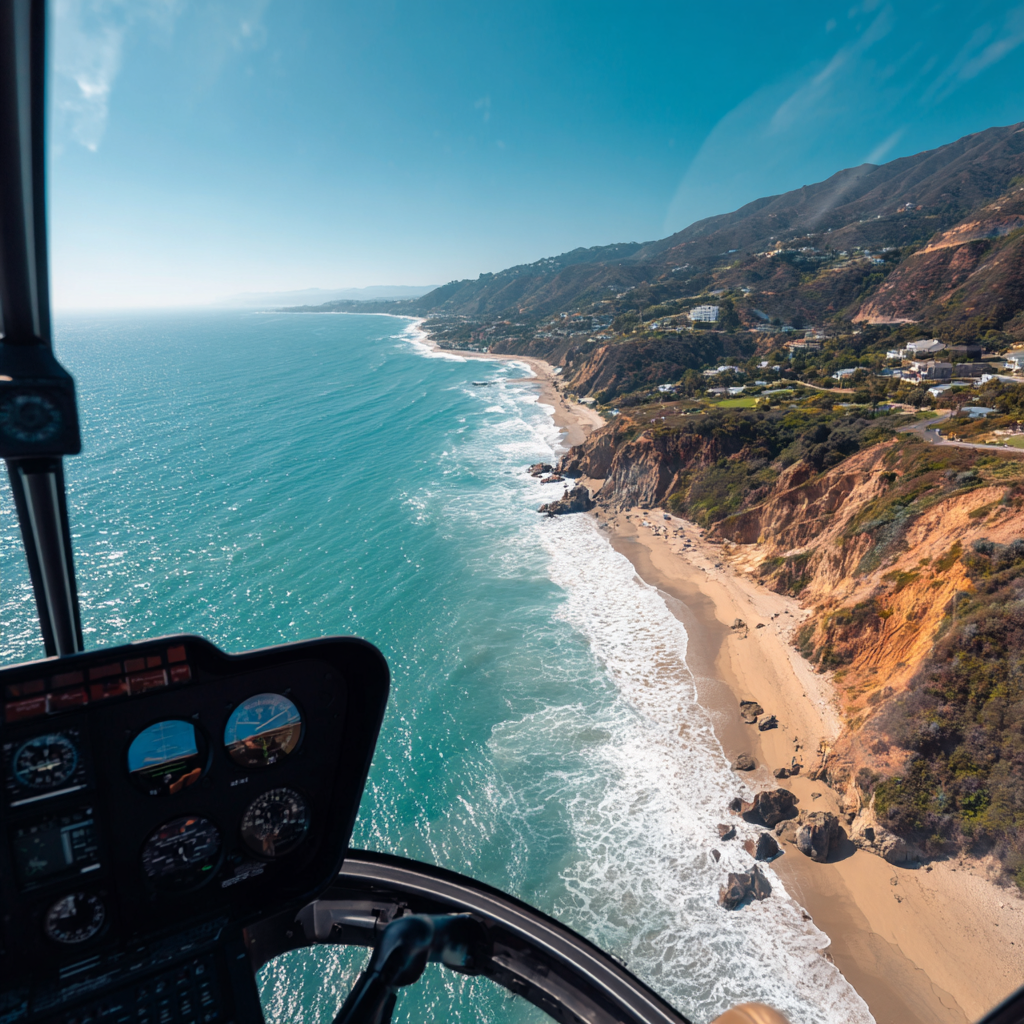
You’ll choose your Malibu helicopter tour duration by balancing flight time against route coverage, fuel/load limits, and the camera-ready pacing you want over key shoreline landmarks. On a short flight, you’ll prioritize a tight corridor and faster turns for quick, high-impact views; on a longer flight, you’ll extend range for broader coastal segments, smoother orbit passes, and more reposition time between points of interest. Your ideal length depends on whether you’re optimizing for efficiency and budget or for maximum aerial perspective and shot variety.
Choosing The Right Duration
How long should your Malibu helicopter tour be to capture the coastline’s signature cliffs, coves, and mountain backdrops without feeling rushed? You’ll want enough airtime for stable orbits over Point Dume, smooth transitions along the surf line, and a brief inland climb that reveals the Santa Monica Mountains’ ridgelines. Choose duration by matching your goals to flight planning: more waypoints, photo holds, and altitude changes require added minutes for safe spacing and ATC coordination. Review pricing options against what’s included—route complexity, headset narration, and door-off capability—so you’re buying performance, not just time. Factor accessibility concerns too: drive time to the helipad, boarding assistance, and motion sensitivity can make a slightly longer, steadier profile feel easier.
Short Vs Long Flights
Where does the sweet spot land between a quick coastal skim and an unhurried aerial survey? You’ll choose between short flights that prioritize immediacy and long flights that maximize spatial context. Think in terms of mission profile: time-on-station, route geometry, and what you want your camera and eyes to resolve at altitude.
- Short flights: You’ll optimize for a tight shoreline corridor—fast lift, rapid reveal of Point Dume, minimal fatigue, and lower exposure to coastal haze.
- Long flights: You’ll extend your radius to stack vistas—Malibu Canyon, ridge lines, and layered ocean gradients—giving stabilization systems more time to settle and capture cleaner pans.
- Hybrid pick: You’ll target 20–30 minutes when you want both efficiency and a complete coastal narrative without diminishing returns.
Best Time and Weather for a Malibu Coastal Helicopter Tour
Timing and weather shape every detail of a Malibu coastal helicopter tour—from visibility over the Santa Monica Mountains to the smoothness of your ride above the shoreline. You’ll get the sharpest visuals on clear mornings, when the marine layer hasn’t thickened, and the sun angle boosts contrast on cliffs and surf lines. For the best wind, target light offshore or weak onshore flow; it reduces drift, rotor workload, and turbulence near ridgelines.
Peak season usually brings stable temperatures, but it can also add haze and coastal congestion that compresses airspace and shifts routes. If you want glassy air, fly after a front passes, when pressure gradients relax and visibility spikes. Avoid afternoons with strong sea breezes and convective bumps above heated canyons.
What to Bring on a Malibu Helicopter Tour
You’ll want layered, close-fitting clothing because rotor wash and coastal microclimates can quickly shift cabin comfort. Bring a camera with a secured strap so you can shoot sharp coastline frames without risking loose gear in flight. Pack a valid ID for check-in and apply broad-spectrum sunscreen since glare off the Pacific can intensify UV exposure, even through the canopy.
Essential Clothing And Layers
Even on a sunlit Malibu morning, the coastal air shifts quickly once rotor wash and altitude add wind chill, so dress in adaptable layers. You’ll stay comfortable if you treat essential clothing like a modular system that manages temperature, moisture, and cabin airflow without bulk. Prioritize layering essentials that compress easily and won’t snag on seatbelts or headset cables.
- Base layer: lightweight, moisture-wicking top that stabilizes skin temperature and dries fast.
- Mid layer: thin fleece or insulated vest for high-efficiency warmth-to-weight in cooler thermals.
- Outer layer: wind-resistant softshell with minimal flapping fabric; choose a snug cuff to reduce draft.
Wear closed-toe shoes with grippy soles for helipad surfaces, and skip oversized hats or loose scarves that can whip in the downwash.
Camera, ID, And Sunscreen
Where should you focus your pocket space before a Malibu coastal helicopter tour lifts off? Prioritize a compact camera setup you can operate one-handed with a tether. Confirm camera compatibility with vibration: enable optical stabilization, fast shutter (1/1000+), and a polarizer to cut ocean glare. Keep spare batteries warm in an inner pocket, and use a low-profile lens hood to reduce rotor-wash artifacts.
Next, pack a government-issued ID and the exact booking name to streamline check-in and ensure weight-balance compliance. Store both in a zippered pouch so nothing becomes a cabin projectile. Finally, choose high-SPF, non-greasy sunscreen options—mineral formulas reduce eye sting and reflect UV near the water. Apply before boarding and reapply post-flight.
How to Vet and Book a Safe Malibu Helicopter Tour
Before you lock in a Malibu coastal helicopter tour, vet the operator like you’d vet any aircraft service: confirm FAA Part 135 certification (not just Part 91 sightseeing), verify the aircraft tail number and maintenance status, and check the pilot’s credentials and recent flight time. Then validate the safety stack with a quick, data-driven review: 1. Ask for SMS practices, risk assessments, and weather minimums; you want disciplined go/no-go decisions.2. Request proof of crew certifications, recurrent training, and drug-testing enrollment; consistency beats marketing.3. Audit insurance limits, dispatch procedures, and passenger briefing standards, including life vests for coastal routes. When you book, compare pricing transparently, but don’t let a booking discount override safety signals. Pay by card, read cancellation terms, and confirm your exact route, altitude profile, and seat assignment.
Conclusion
You’ve seen Malibu’s coast from a cockpit vantage: surf seams, cliff contours, canyon cuts, and celebrity coves. Now you can choose a route, match minutes to your mission, and time your tour for steady skies and softer sea haze. Bring polarized shades, secure straps, and a small camera; keep weight limits in mind. Vet operators for FAA compliance, maintenance logs, and pilot hours. Book smart, fly smooth, and savor Malibu’s sweeping, salt-sparked scenery.