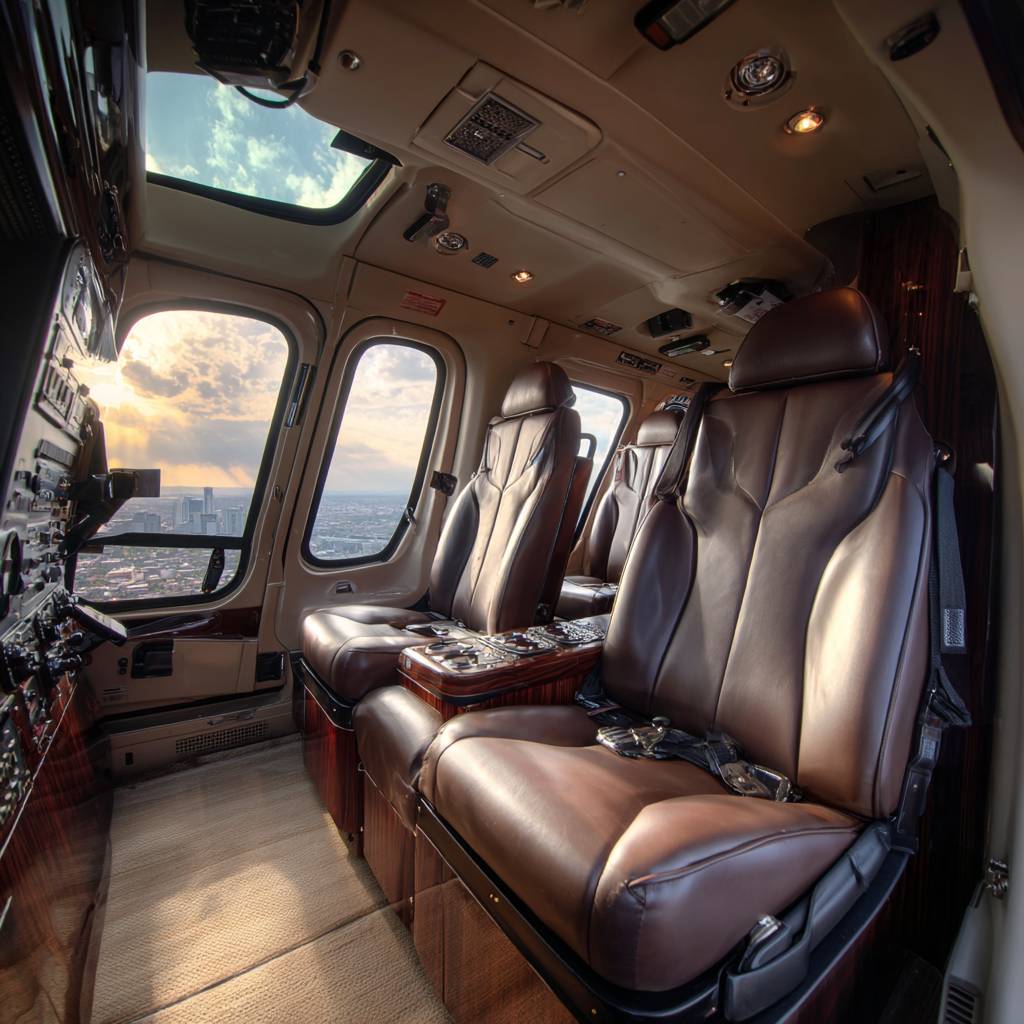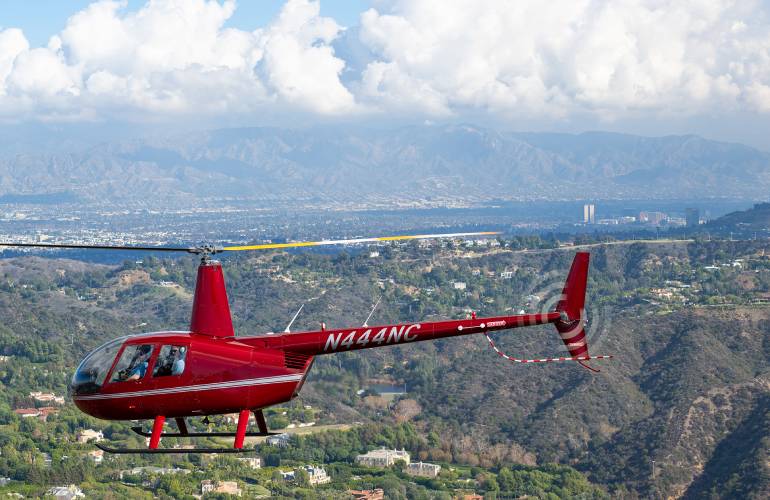
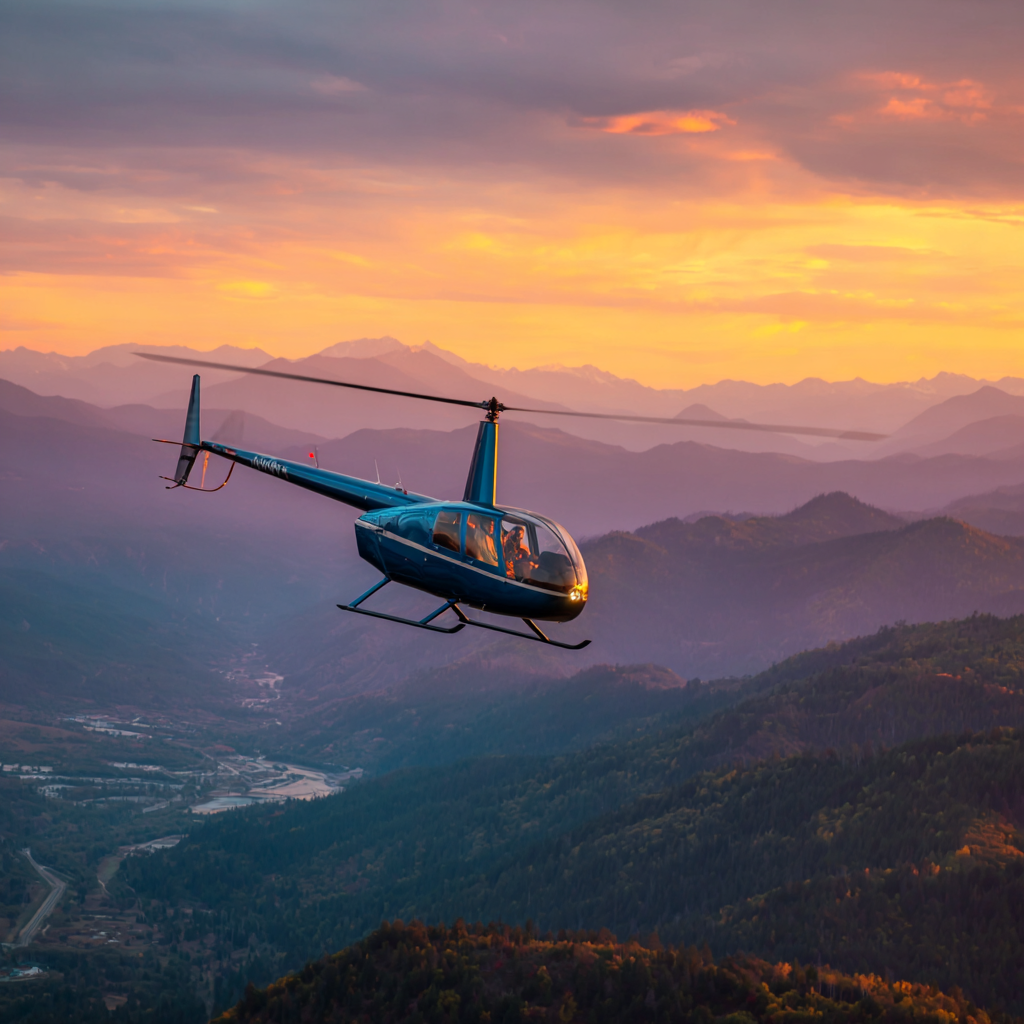
Helicopter charters are becoming the premium layer in private travel because you’re buying last-mile access and risk compression, not just a seat. You can replace 90–150 minutes of congested ground transfer with 12–25 minutes of airborne travel, often landing within 5–10 km of your destination. Under Part 135, you get more predictable duty cycles, controlled routing, and higher dispatch reliability, increasingly backed by SLA-style on-time targets and disruption credits. Keep going to see routes, costs, landing rules, and fast safety checks.
When Are Helicopter Charters Actually Worth It?
When do helicopter charters actually earn their premium? You justify the uplift when mission cost outweighs friction: last-mile access, constrained schedules, or high-value assets onboard. If you’re moving executives, medical specialists, or critical parts, you’re buying risk compression—higher dispatch reliability, controlled routing, and predictable duty cycles under Part 135. You’ll see value when you can monetize continuity: preventing a plant outage, closing a deal, or maintaining security separation. For luxury branding, you’re also purchasing an experiential halo that converts into customer retention and partner signaling. Evaluate sustainability impact with measurable levers: SAF availability, optimized load factors, route planning, and newer airframes with lower specific fuel burn; publish per-seat emissions and offset strategy. If you can’t quantify the delta, don’t charter.
Where Do Helicopter Charters Save the Most Time?
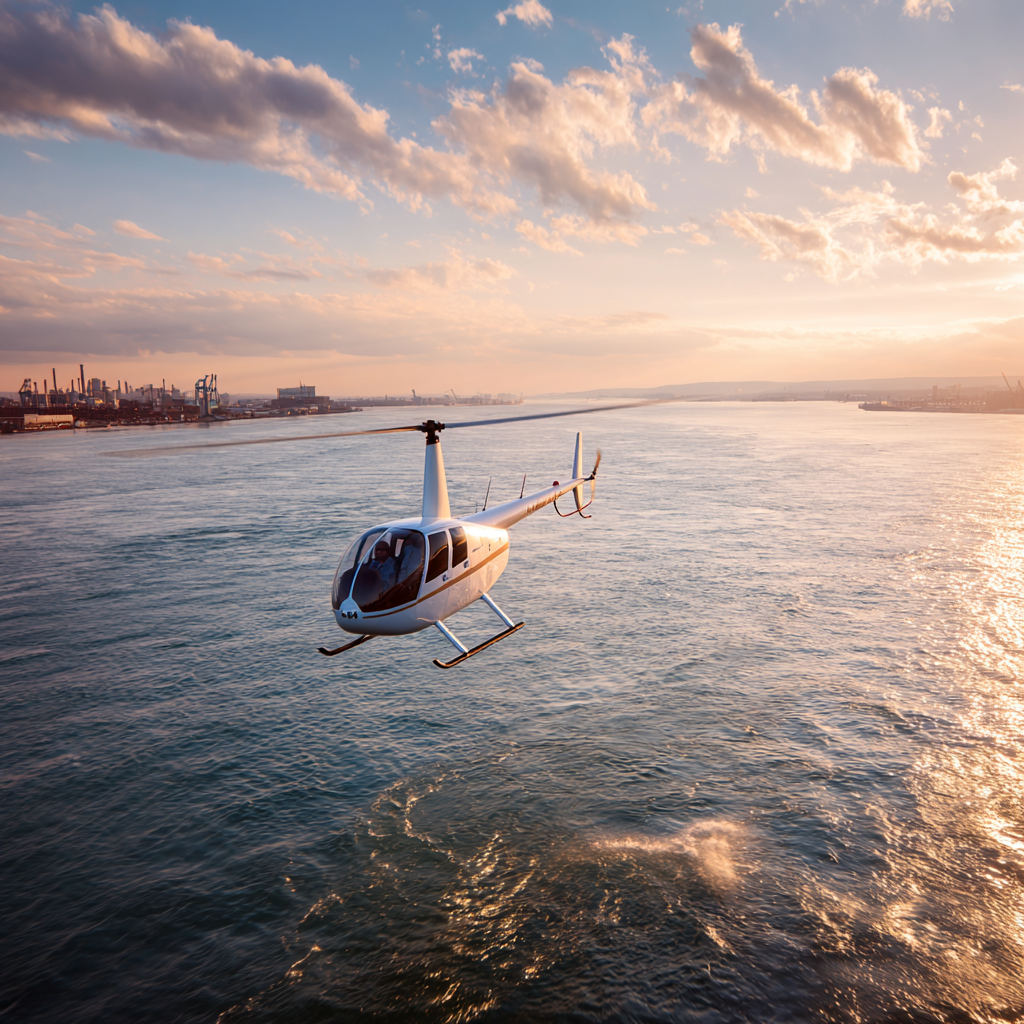
You save the most time when you replace ground legs with high-friction variables—congestion, distance, and access constraints—starting with airport-to-city transfers where curb-to-vertiport routing and direct final-mile landing compress total trip time. You’ll see outsized gains in traffic-heavy urban corridors because helicopters bypass peak-hour bottlenecks and keep ETAs stable under fluctuating road speeds. You also cut hours on remote resort access when roads, ferries, or switchbacks impose long transfer chains that a point-to-point flight eliminates.
Airport-to-City Transfers
Where do helicopter charters save the most time on airport-to-city transfers? You win minutes where ground infrastructure bottlenecks stack: curb access, perimeter roads, and unpredictable gate-to-exit flow. With a landside pad or nearby vertiport, you compress the journey into a scheduled slot, not a variable queue. You also streamline airport security by pre-clearing manifests and using dedicated screening protocols, cutting dwell time without sacrificing compliance. Modern turbine fleets optimize fuel efficiency on short sectors through power management and reduced taxi/idling compared with car transfers. The biggest gains show up when you:
- Land within 5–10 km of your final meeting point
- Fly from airports with constrained access roads
- Use operators with integrated ground handling
- Book during peak arrival/departure banks
Traffic-Heavy Urban Corridors
How much time can a helicopter charter claw back on traffic-heavy urban corridors? In peak conditions, you can convert 90–150 minutes of stop‑and‑go roadway time into 12–25 minutes airborne, especially on CBD‑to‑suburb or cross‑metro links where average vehicle speeds drop below 15 mph. Operators plan direct routing with GNSS approaches, noise‑abatement tracks, and pad-to-pad logistics, so you’re not just flying—you’re removing curbside friction. You’ll still follow airport etiquette at rooftop or FBO-style facilities: ID ready, minimal baggage, rapid security screening, and precise arrival windows. Build weather considerations into your schedule—ceilings, visibility, and wind limits can shift ETAs—then add a ground fallback to protect reliability.
Remote Resort Access
Urban hops prove how rotorcraft erase congestion; remote resort runs show an even larger delta by removing the slowest leg of the trip—winding mountain roads, ferry schedules, and last‑mile transfers from regional airports. You convert a multi‑modal itinerary into a single, point‑to‑point profile, maximizing Remote Accessibility and measurable Time Saving Potential.
- Replace 120–240 minutes of road switchbacks with 25–45 minutes airborne.
- Bypass fixed ferry headways; you fly on-demand and land dock‑adjacent.
- Cut baggage handling cycles: curb-to-pad reduces dwell time and the risk of misconnects.
- Stabilize arrival variance: IFR-capable operators compress schedule uncertainty versus traffic and weather-prone roads.
You’ll see the biggest gains when ground speed falls below 25 mph or when transfer nodes stack.
Helicopter Charter or Private Jet: Which Wins?
In practice, the “winner” between a helicopter charter and a private jet depends on mission profile—distance, access, and total door-to-door time—not cabin aesthetics. If you’re optimizing end-to-end minutes, rotorcraft can reduce ground transfer and slot friction by landing closer to the destination and skipping congested terminals. If you’re optimizing cruise efficiency, jets dominate: higher true airspeed, better fuel burn per mile, and greater range with fewer technical stops.
You should model total time as: ground ingress + security/handling + flight + egress. Add cost drivers: minimums, reposition legs, and crew duty limits. Choose based on payload and schedule resilience, not vibes—whether you’re moving a French pastry case or specialized gear for underwater welding crews.
What Routes Are Helicopter Charters Best For?
Where do helicopter charters deliver the biggest door-to-door advantage? You’ll see it on routes where ground friction dominates: 20–200 miles, congested corridors, and hard-to-schedule multi-stop days. Operators optimize around speed-to-pad, not runway cycles, so your total trip time drops even when cruise speed isn’t higher.
- City-to-suburb executive hops: you bypass peak-hour bottlenecks and hit meeting windows with tighter variance.
- Airport-to-downtown transfers: you cut connection risk when airline banks compress.
- Remote industrial sites: you reach energy, mining, and telecom assets on demand, including high altitude profiles when required.
- Coastal and mountain circuits: you combine point-to-point utility with stabilized aerial photography without repositioning aircraft, maximizing mission density and utilization.
Where Can a Charter Helicopter Land (and What’s Restricted)?
You can’t land a charter helicopter just anywhere—you’ll use approved landing zones such as licensed heliports, audited private pads, and vetted temporary LZs that meet obstacle clearance, surface, and approach/departure criteria. You’ll also have to plan around restricted airspace (e.g., controlled zones, stadium TFRs, national security areas) and local noise/curfew rules that can block otherwise viable sites. When a non-standard landing is required, you’ll secure the right permits and property approvals in advance, and your operator will document the risk assessment and regulatory sign-offs before dispatch.
Approved Landing Zones
Exactly how flexible is a luxury helicopter charter when it comes to touchdown points? More than you’d think—if you choose approved, surveyed sites that meet performance, safety, and community criteria. Operators validate approach/departure paths, obstacle clearance, load-bearing surfaces, and rotor downwash envelopes, then schedule arrivals to preserve airport etiquette and optimize fuel economy by reducing reposition legs and minimizing hover time.
- Certified heliports: audited lighting, markings, and firefighting access.
- Airport FBO pads: rapid security screening, ground handling, seamless transfers.
- Hospital-grade helipads: tight geometry standards, controlled access, predictable availability.
- Pre-vetted private sites: engineered pads, known coordinates, documented risk controls.
You’ll get a site brief with coordinates, dimensions, and operational limits before wheels-up.
Restricted Areas And Permits
How far can a luxury helicopter charter push landing flexibility before regulations push back? You can land almost anywhere you can secure legal access, clear obstacles, and avoid rotor-wash hazards, but airspace and ground rules narrow options fast. Expect no-go zones near Class B cores, stadium TFRs, critical infrastructure, and wildlife refuges; operators must verify NOTAMs and coordinates before dispatch. For rooftops, yachts, beaches, and private estates, you’ll need site surveys, load limits, firefighting access, and neighbor-noise constraints. Many destinations require restricted approvals from airports, municipalities, parks, or port authorities. Your timeline hinges on permit processes: some helipads clear in 24–72 hours; dense urban or protected sites can take weeks, plus insurance certificates and security plans. Plan early.
How Do You Book Helicopter Charters Without Headaches?
Where do bookings go sideways—misquoted ferry legs, mismatched aircraft, or missing permits? You prevent this by standardizing your request: exact passenger count, baggage weights, route coordinates, time windows, and ground-transfer interfaces. Ask for an itemized quote that separates flight time, repositioning, landing/parking, ATC/handling, de-icing, and standby. Confirm aircraft class, cabin layout, and payload-range math against forecast density altitude; operators should provide performance margins, not guesses. Use a single trip sheet that locks manifests, billing codes, and contacts, then require digital change control for any deviation. Verify scheduling resilience: backup aircraft options, crew duty limits, and maintenance slots. Finally, align documentation early—COIs, site permissions, and client security audits—and ensure pilot training records are current for the mission profile.
Conclusion
You choose helicopter charters when minutes equal money: you skip traffic, cut transfers, and land closer to demand. You gain speed on 30–150 mile hops, flexibility on point-to-point routes, and access to helipads, rooftops, and approved private sites within regulatory limits. You pay for aircraft, crew, fuel, and handling—then buy back productivity. You book through vetted operators, confirm Pa